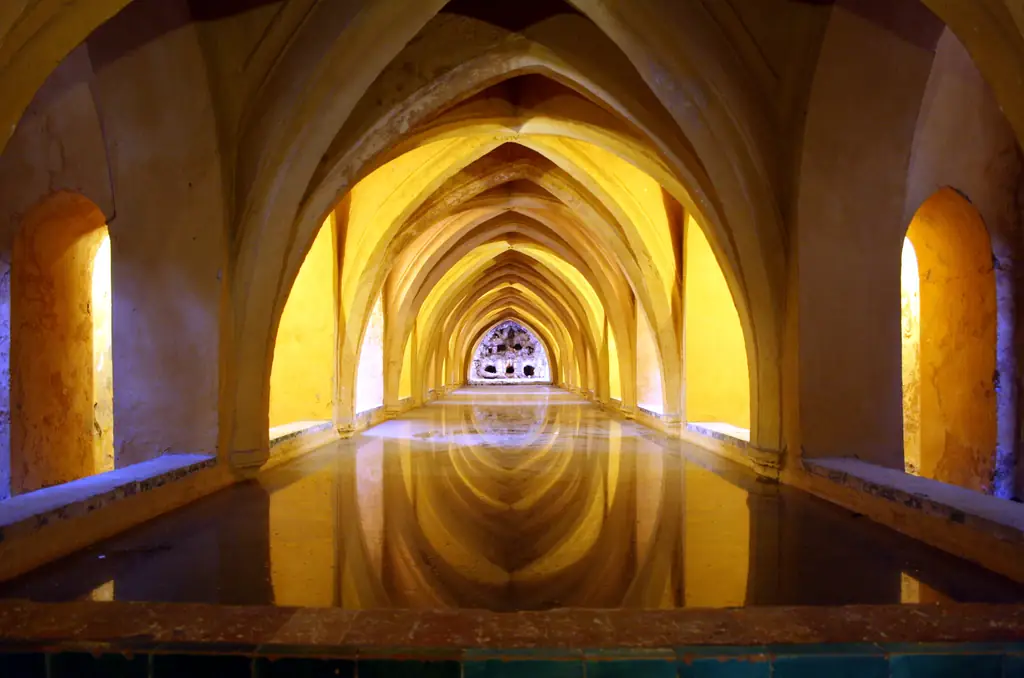
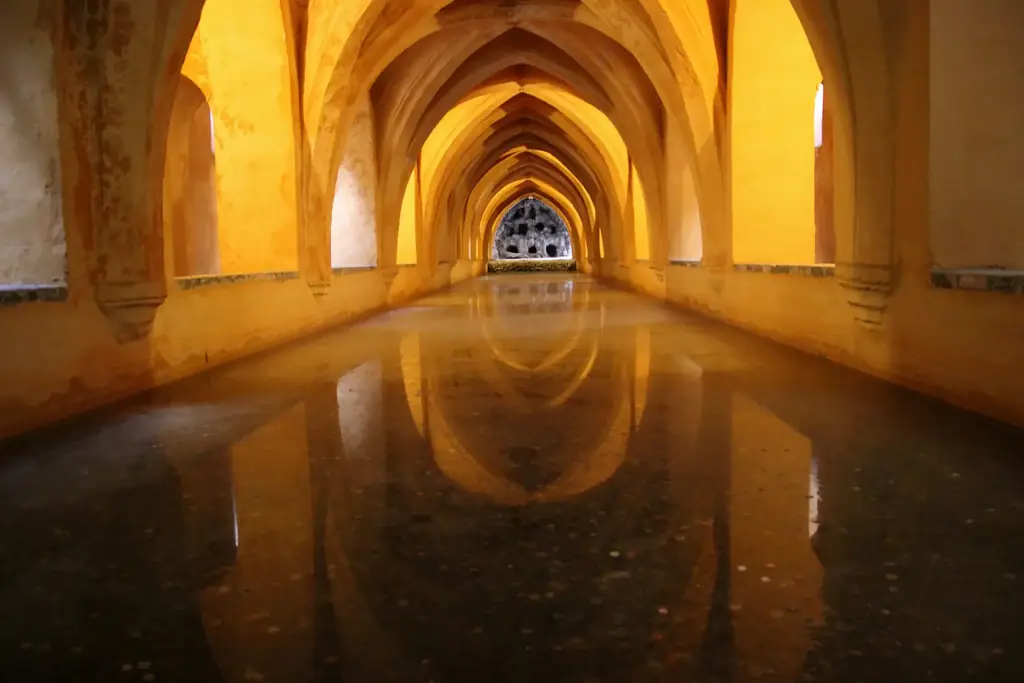
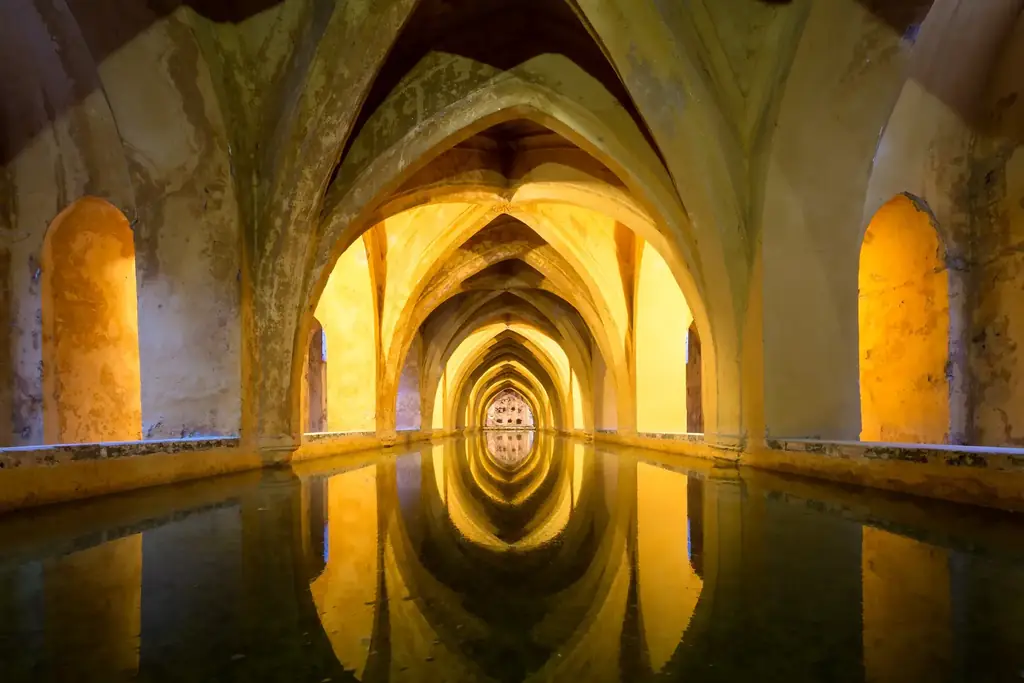
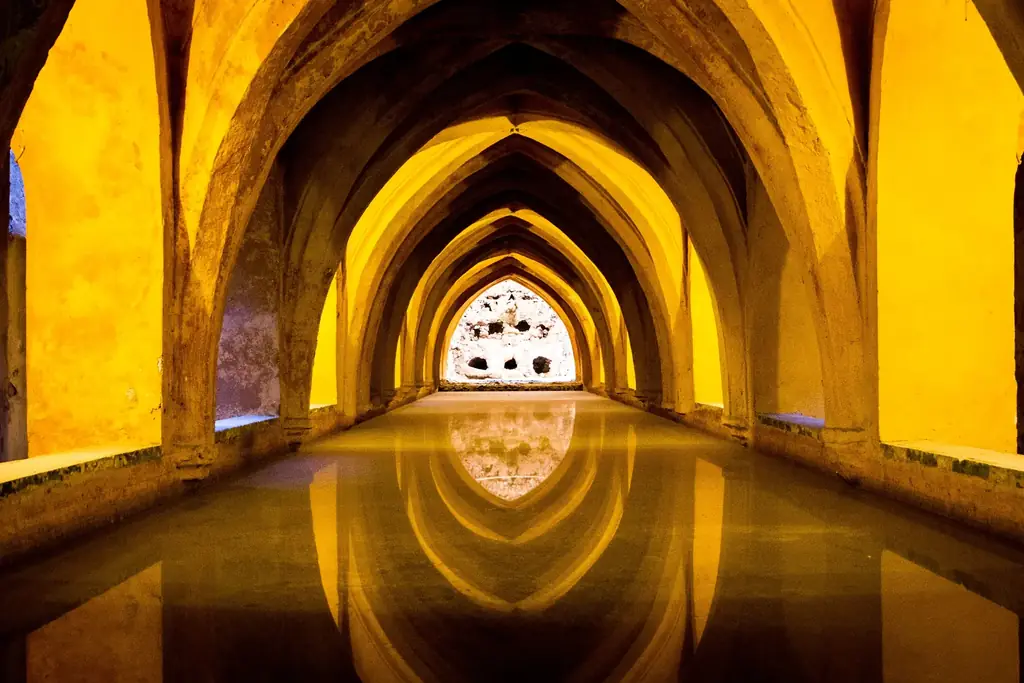
The Baths of María de Padilla (Baños de Doña María de Padilla) are a long, vaulted pool of still water under the Real Alcázar, lit from one end so that the arches reflect in the surface. They are among the most photographed places in the palace, and the name promises a royal bathhouse. The reality is different, and just as interesting: the structure is a water cistern from the Gothic palace of the 13th century, and its connection to María de Padilla is a matter of legend.
The baths are included in the general ticket (€15.50).
What the baths really are
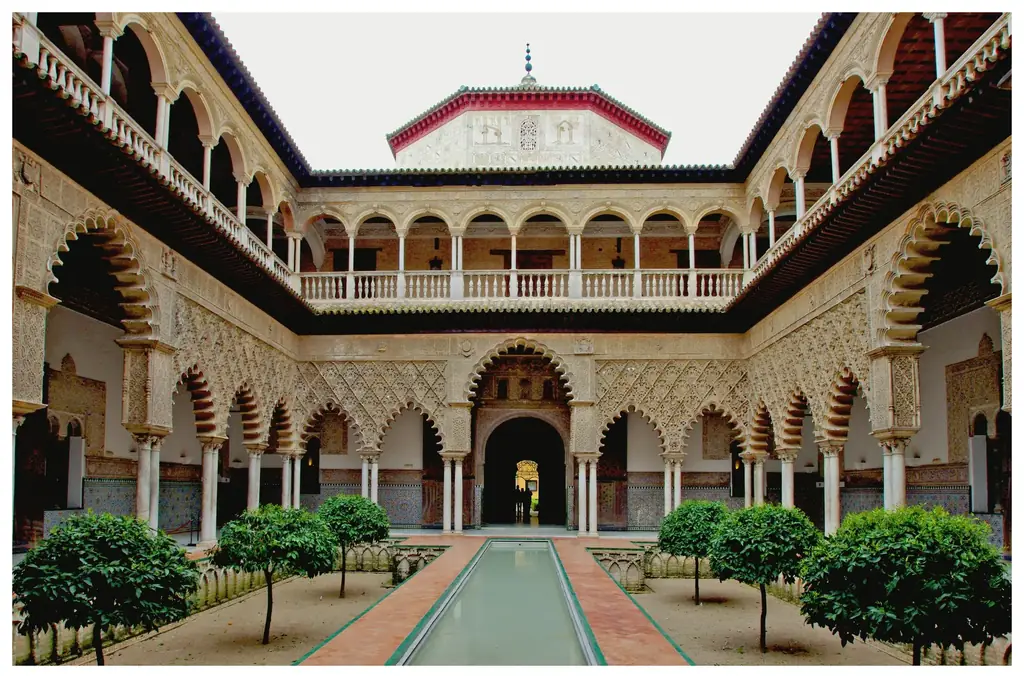
The pool lies in a basement beneath the Patio del Crucero, one of the courtyards of the older part of the palace. It is an elongated water basin roofed by a series of Gothic cross-ribbed vaults. Those vaults belong to the Gothic Palace built for King Alfonso X from 1258, on the site of an earlier Almohad courtyard.
In other words, the space was a reservoir that stored water for the palace and its gardens. It was not a bath, and it predates the woman it is named after by about a century.
Two layers of history
Almohad (12th century): the Patio del Crucero above began as an Islamic garden courtyard, divided into quadrants by two raised, intersecting paths, with the planting beds far below.
Gothic (13th century): Alfonso X's builders turned the lower level into the vaulted spaces you walk through today. See the Islamic history of the Alcázar for the earlier phase.
Who was María de Padilla?
María de Padilla was the lover of King Pedro I of Castile, the builder of the Alcázar's Mudéjar palace. Pedro was officially married to Blanche of Bourbon, but María was his companion for most of his reign and the mother of his children. After her death, Pedro had their union recognised, and their children were declared legitimate.
That much is history. The stories told about the baths are not.
The legends
Several tales grew up around the pool, and guides still enjoy telling them. Treat them as folklore:
The royal bath. The most common story is that María de Padilla bathed here, hidden from the court. The structure's date and purpose make this unlikely.
The courtiers' devotion. A well-known tale says that courtiers, to flatter the king, drank the water in which María had bathed. It is a legend, repeated for centuries, with no documentary basis.
The refuge. Another story says she hid here from the king's attentions. It is a romantic invention.
Legends like these are part of how the Alcázar has been remembered, and they explain the name. They should not be confused with the documented history above.
Visiting the baths
Where: below the Patio del Crucero, between the palaces and the gardens. Follow the signs from the Gothic palace.
How long: ten minutes is enough, longer if you want photographs.
Light: the pool is at its most dramatic when the far arch glows and the water is still. Early in the day there are fewer people standing at the edge, which matters for the reflection. See the photography guide.
Access: the baths are underground, reached by steps. See wheelchair access.
Crowds: the passage is narrow, so it fills quickly with groups after mid-morning. Book the first entry slot (09:30) on the official shop if you want it quiet.
Worth combining with
The Gothic Palace above, with its tapestry hall and tiled rooms.
A guide is useful here mostly to untangle the history from the legends. The guided tour with priority access (from €56.00, free cancellation) passes through the older palaces as well as Pedro I's.
Frequently asked questions
Did María de Padilla really bathe in the baths?
There is no evidence she did. The structure is a Gothic cistern, and the bathing stories are legends.
How old are the Baths of María de Padilla?
The vaults date from the Gothic palace of Alfonso X, begun in 1258, built over a 12th-century Almohad courtyard.
Are the baths included in the ticket?
Yes, in the general ticket (€15.50).
Where exactly are the baths?
In a basement beneath the Patio del Crucero, between the palaces and the gardens.
Can you touch or enter the water?
No. The pool is viewed from the walkways along its sides.
Were the baths used in Game of Thrones?
The Alcázar was used as the Water Gardens of Dorne in season 5; we have not found a reliable source listing the baths among the scenes. See Game of Thrones at the Alcázar.
In pictures
Photographs from Wikimedia Commons, each under its own open licence, credited beneath it.
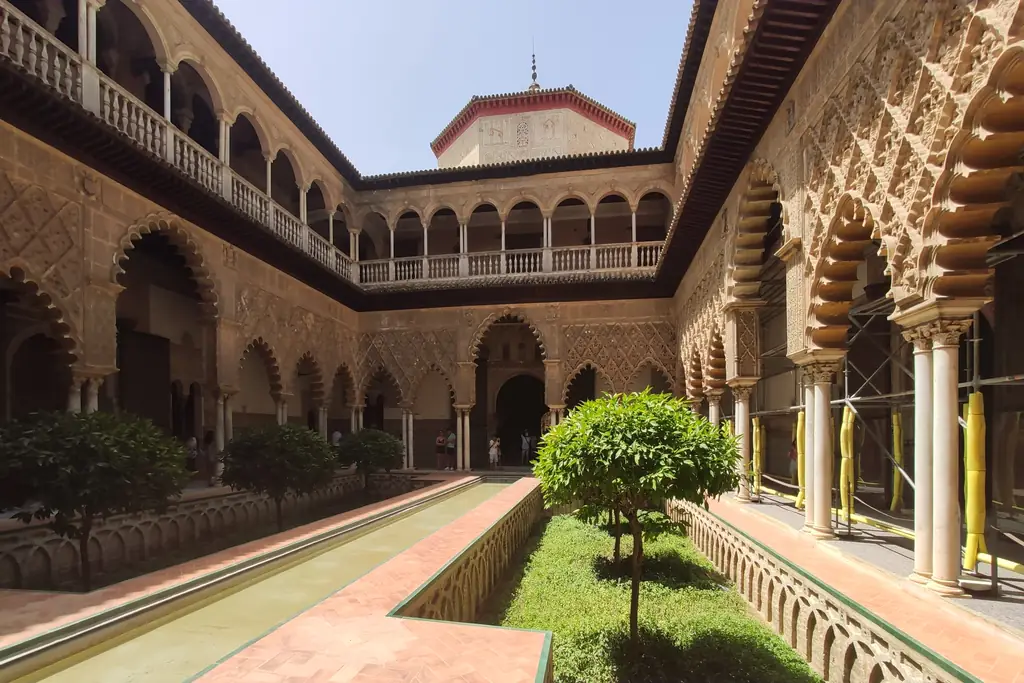
Photo: Miguel Hermoso Cuesta, CC BY-SA 4.0Not a bathhouse: a water cistern under the Patio del Crucero, built with the Gothic palace of Alfonso X from the 1250s.
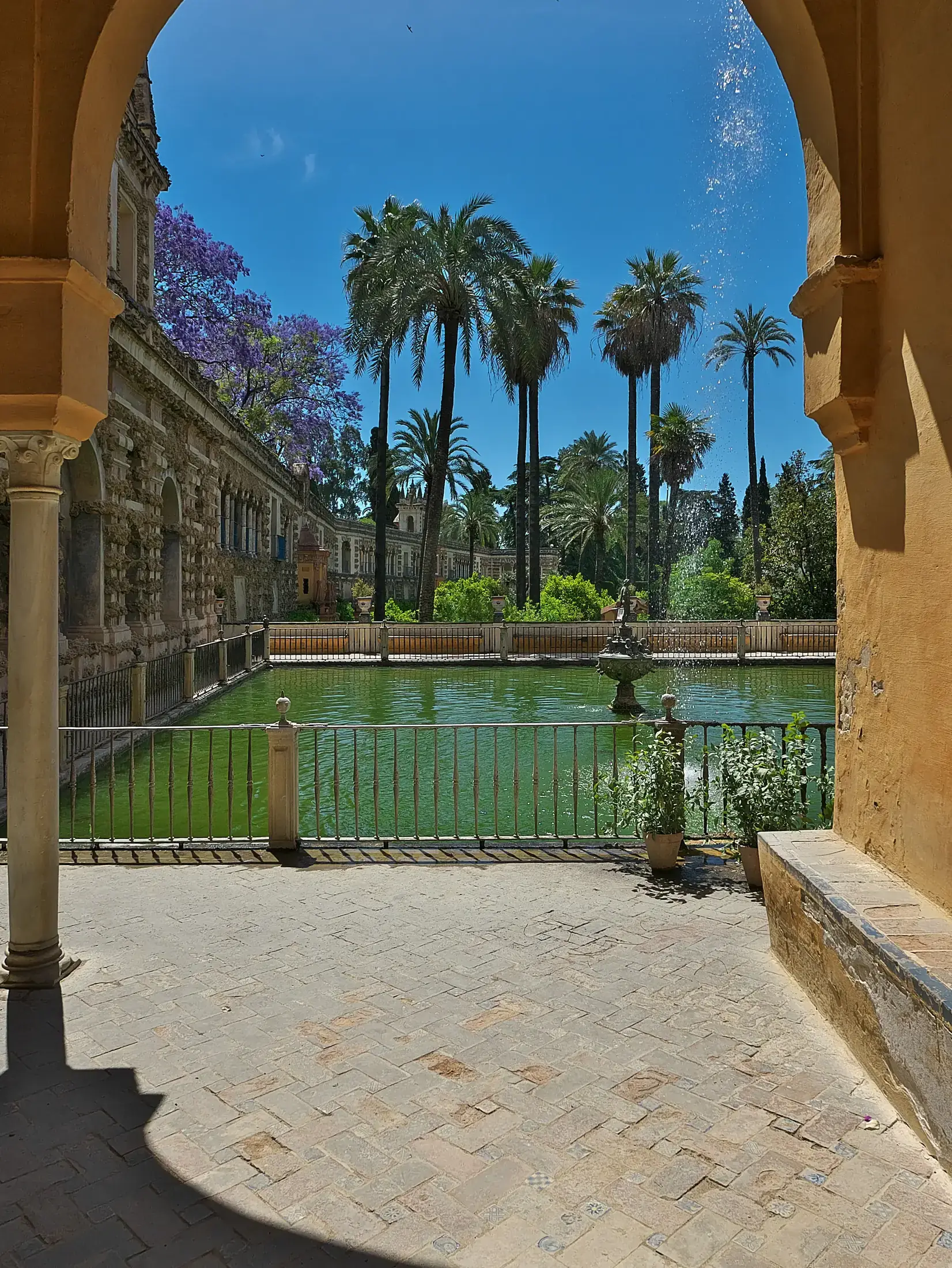
Photo: Rafa Esteve, CC BY-SA 4.0The light comes from openings at the far end. Come early: the passage is narrow and fills with groups after mid-morning.
Prices and currency can differ between the two offers — check both before booking.
Prices, ratings and review counts from Viator, checked on September 30, 2026. They can change at any time.
GetYourGuide prices, ratings and review counts checked on October 7, 2026. They can change at any time.
Prices per adult, ratings and conditions come from Viator and GetYourGuide; each platform's own page shows today's price. Affiliate links: if you book through one, the site may earn a commission from that platform, at no extra cost to you.