Gothic Palace of the Real Alcázar: History & What to See
Updated September 19, 2026
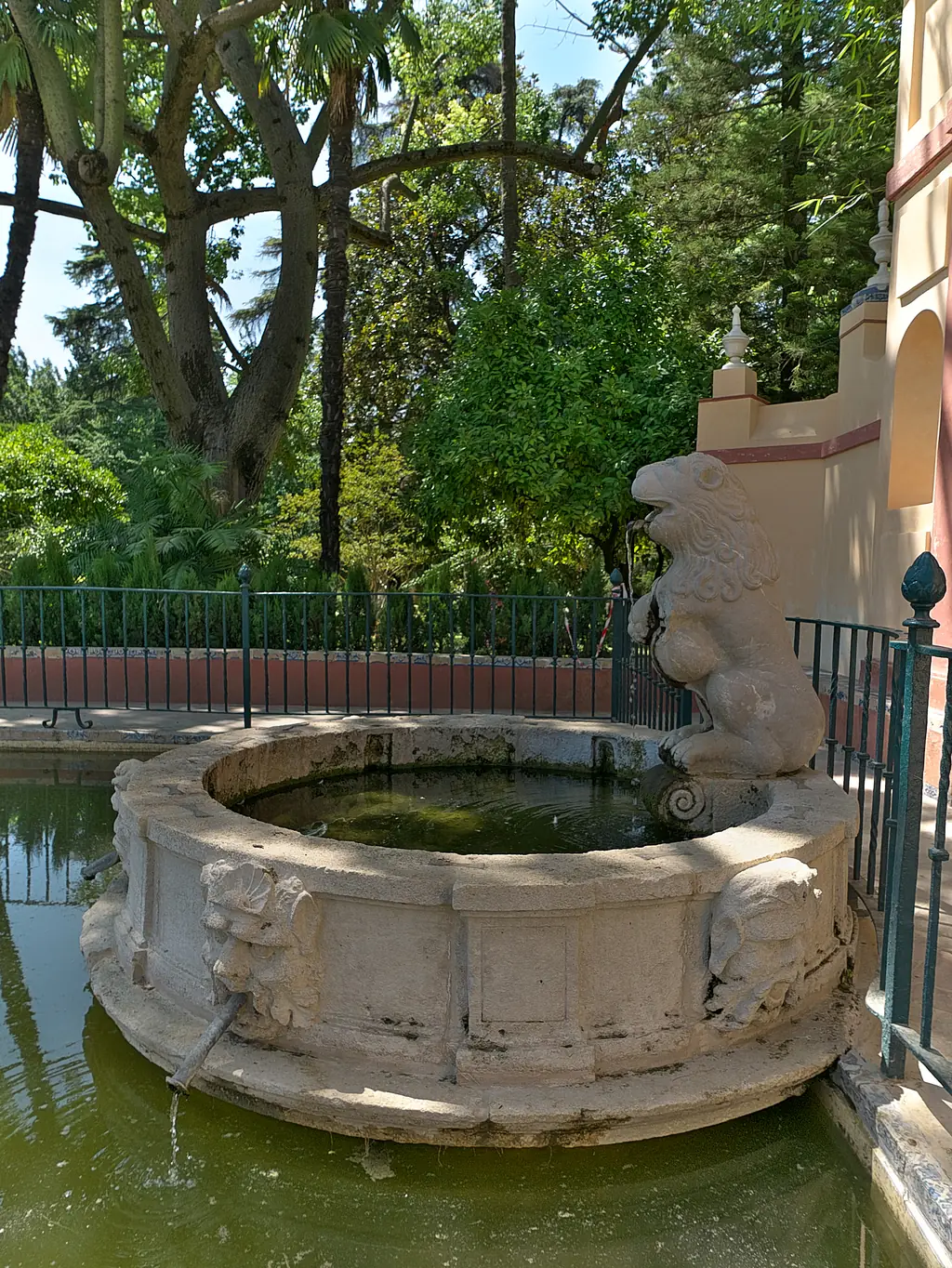
The Gothic Palace is the part of the Real Alcázar that most visitors walk through on their way from the Mudéjar palace to the gardens, and the part they remember least. That is a pity. It is older than Pedro I's palace, it was the first major Christian building in the Alcázar after the conquest of Seville, and its halls hold some of the palace's finest tilework and a series of tapestries celebrating Charles V.
It is included in the general ticket (€15.50).
Why a Gothic palace here?
When Ferdinand III of Castile took Seville in 1248, the Alcázar became a Christian royal residence. His son, Alfonso X "the Wise", began a new palace in the 1250s, next to the Patio del Crucero, a courtyard left by the Almohads. The first recorded works date from 1254, and the palace took shape through the following years.
Alfonso built in the Gothic style of Christian Europe: pointed arches and cross-ribbed vaults. It was a statement. A hundred years later his successor Pedro I would make the opposite choice and build in the Islamic tradition; see Mudéjar architecture. Walking from one palace to the other is walking between those two ideas of what a Castilian king's palace should look like.
What survives from the 13th century
The clearest medieval survivals are underground and at the edges:
- The vaults below the Patio del Crucero, including the long vaulted pool known as the Baths of María de Padilla. Their Gothic cross-ribbed vaults belong to Alfonso's palace.
- The Sala de las Bóvedas (Hall of the Vaults), whose name describes its Gothic roofing.
Much of the rest of the palace was altered in the 16th century and then badly damaged by the Lisbon earthquake of 1755.
After the 1755 earthquake
The earthquake that destroyed Lisbon in 1755 was felt across southern Spain, and it hit the Gothic Palace hard. The great hall was rebuilt by the architect Sebastian van der Borcht, in a Baroque style with Neoclassical touches. So when you stand in the main hall today, you are in an 18th-century reconstruction inside a 13th-century footprint.
What to see
The Hall of Tapestries (Salón de los Tapices)
The largest room holds a series of tapestries celebrating Emperor Charles V's conquest of Tunis in 1535. The pieces on display are later copies of the 16th-century originals. One piece is a map of the western Mediterranean seen from an unfamiliar angle: try to find Spain and Italy on it.
The tile dados
The lower walls of the chapel and several halls are covered with painted tiles (azulejos) attributed to the ceramicist Cristóbal de Augusta, made in the late 1570s under Philip II. Unlike the cut-tile mosaics (alicatado) of Pedro I's palace, these are flat painted tiles in the Renaissance manner: grotesques, figures, plants and heraldry. Comparing the two techniques, a few minutes apart, shows how tilework in Seville changed in two hundred years.
The chapel
A small chapel off the main halls, with an altarpiece and more of the Augusta tiles.
The doors to the gardens
The halls open straight onto the gardens. This is the moment to step out, before the midday heat. See the gardens.
How the Gothic Palace fits into your route
A typical visit goes:
- The Patio de la Montería and the façade of Pedro I's palace.
- Pedro I's palace: Patio de las Doncellas, Hall of the Ambassadors, Patio de las Muñecas.
- The Gothic Palace: halls, tapestries, tiles.
- Down to the Baths of María de Padilla.
- Out into the gardens.
The full route is described in what to see inside the Alcázar.
Tips
- Don't rush it. Many people treat these halls as a corridor to the gardens. Give them fifteen to twenty minutes.
- Look down as well as up. The tile dados are at knee to shoulder height, easy to walk past.
- A guide helps to read the tapestries and the layers of rebuilding. The guided tour with priority access (from €37.40, free cancellation) covers the main palaces.
Frequently asked questions
Who built the Gothic Palace?
King Alfonso X of Castile, from the 1250s, next to the Almohad Patio del Crucero.
Is the Gothic Palace older than the Mudéjar palace?
Yes, by about a century. Pedro I's palace dates from the 1360s.
What happened to it in 1755?
The Lisbon earthquake damaged it badly, and the great hall was rebuilt by Sebastian van der Borcht.
Are the tapestries original?
They are later copies of the 16th-century series on Charles V's Tunis campaign.
Is the Gothic Palace included in the ticket?
Yes, in the general ticket (€15.50).
How long do I need there?
Fifteen to twenty minutes, plus time for the baths below.
Four ways in with a guide
Entry included in every tour
- Best seller on Viator
Alcazar and Cathedral of Seville Tour with Skip the Line Tickets
★ 4.6 · 5,396 reviews · 3 hours 30 minutes
✓ Free cancellation
See today’s price
Check availability → - Most flexible
Royal Alcázar of Seville Guided Tour with Priority Access
★ 4.9 · 344 reviews · 1 hour
✓ Free cancellation · Reserve now, pay later
from€37.40
Check availability → - Before opening time
Alcazar of Seville: Exclusive Early Access Tour
1 hour 30 minutes
✓ Free cancellation
See today’s price
Check availability → Skip the Line Seville Alcázar, Cathedral & Giralda Guided Tour
★ 4.8 · 1,103 reviews · 2 hours 30 minutes
Non-refundable once booked
from€56.40
Check availability →
Tour prices, ratings and conditions as shown on Viator when last checked; they can change. Affiliate links.