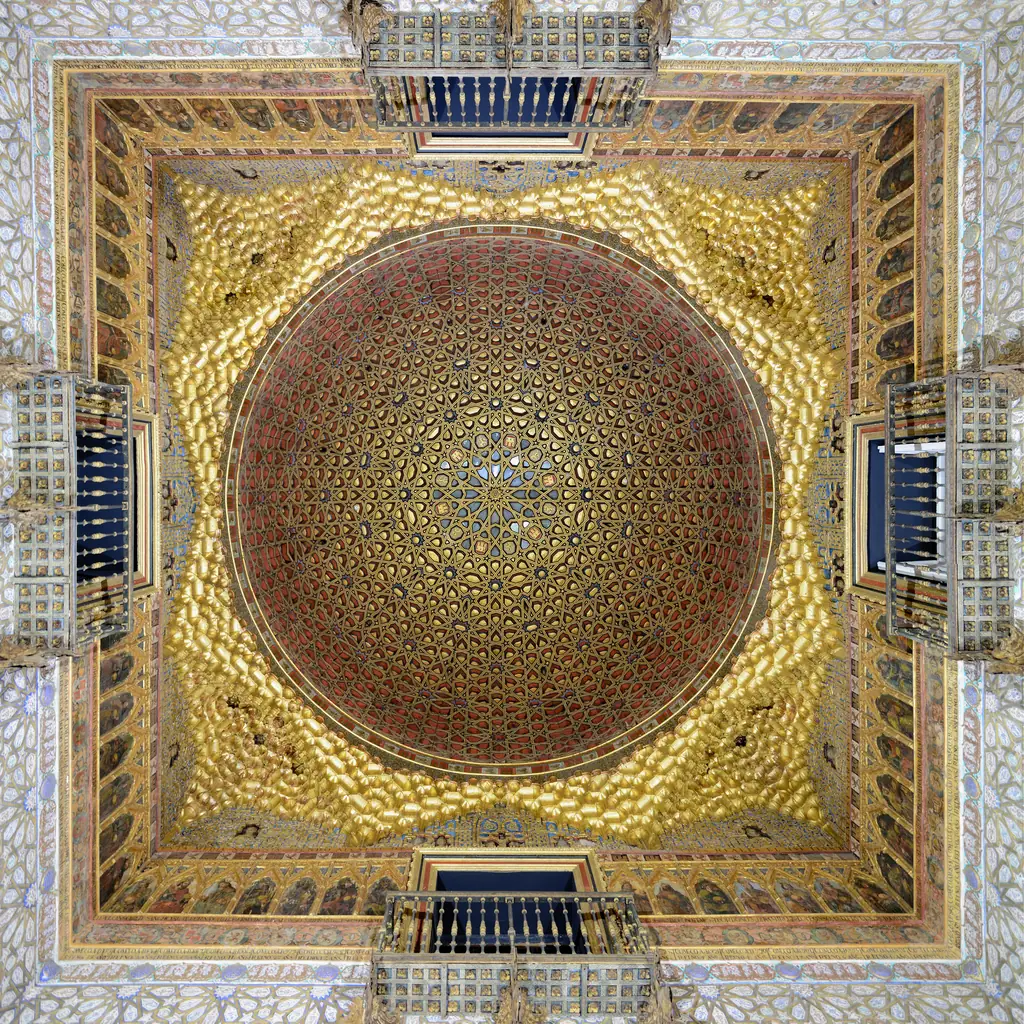
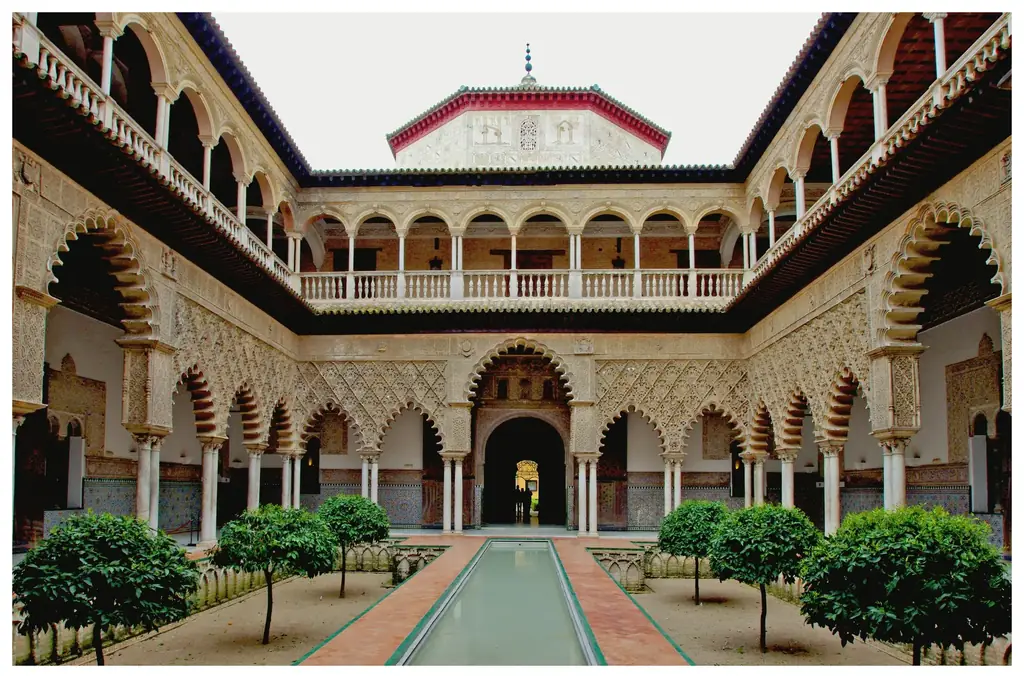
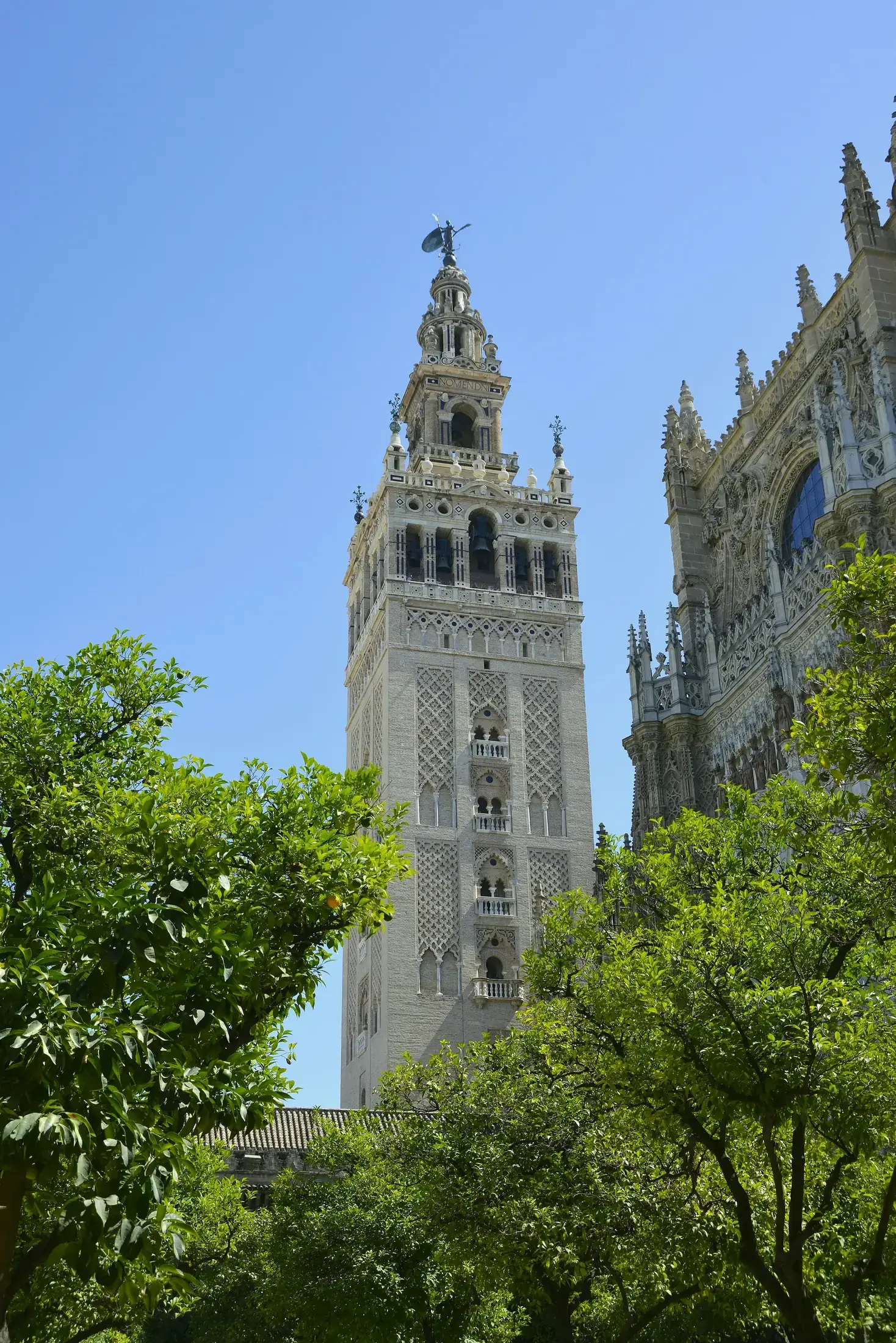
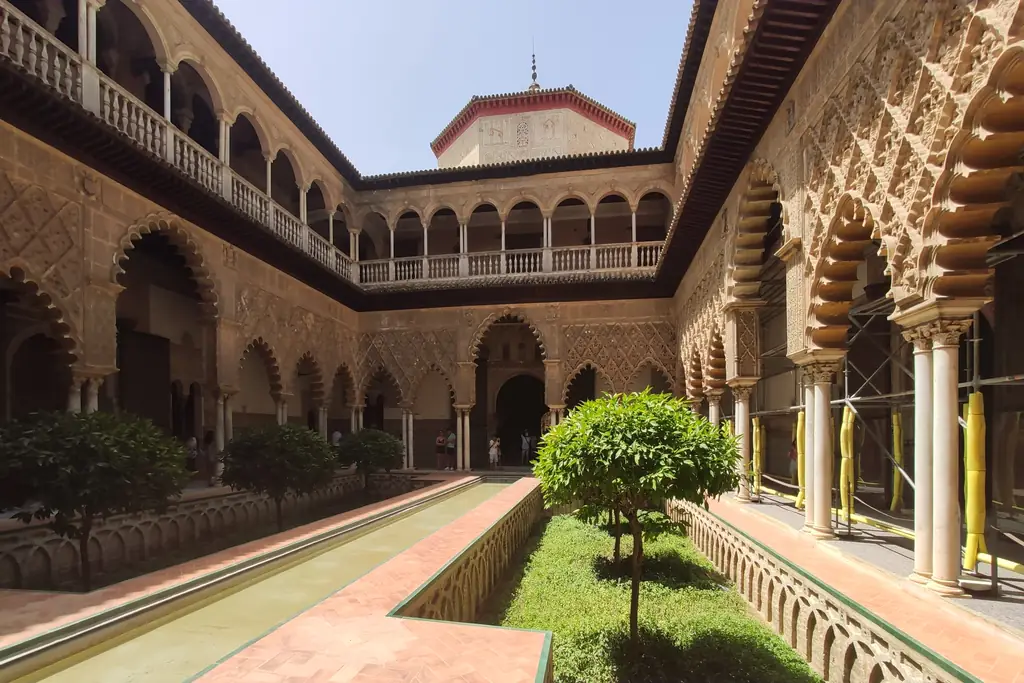
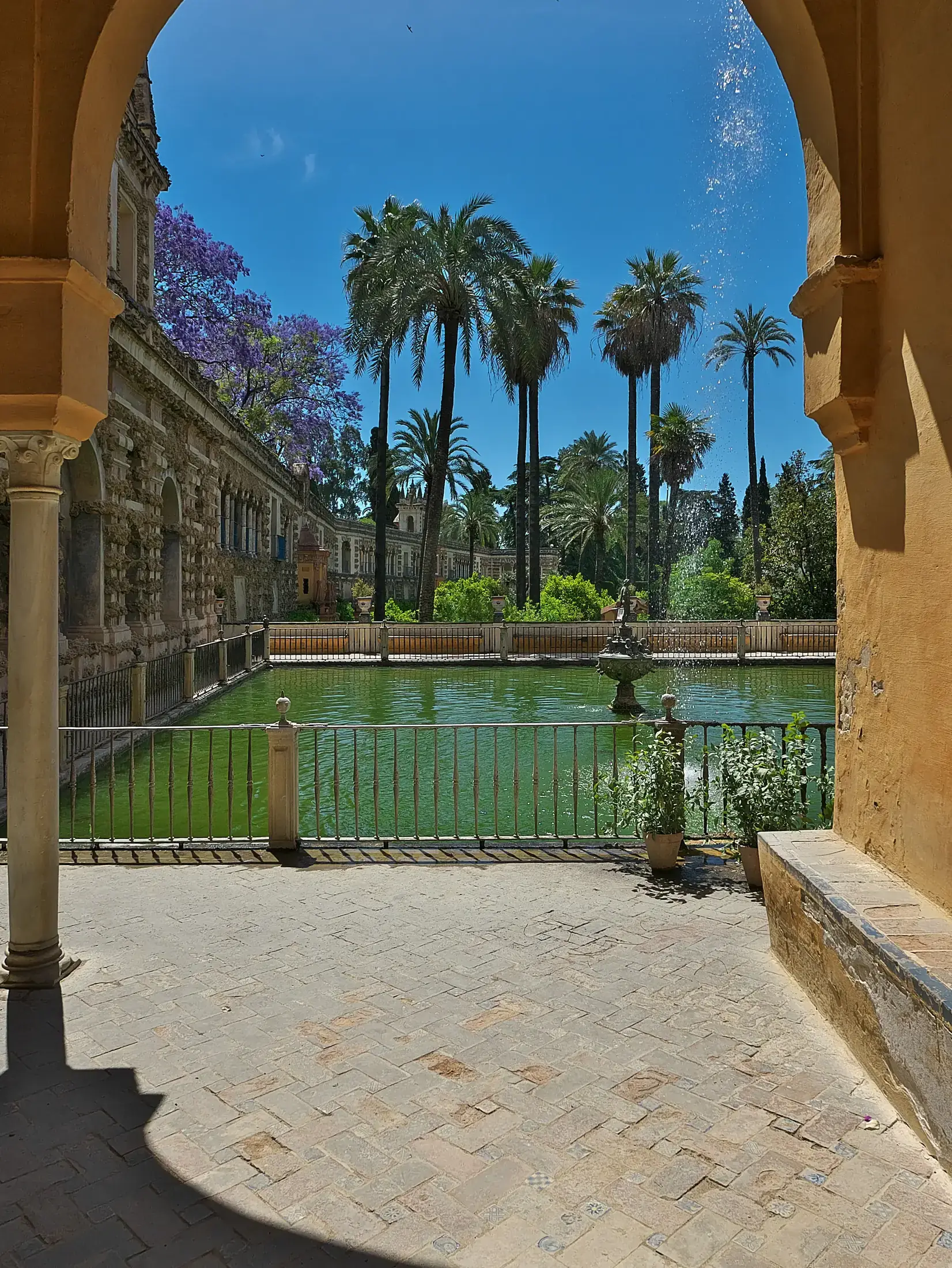
The Real Alcázar grew over a thousand years, from a Moorish fortress into the royal palace it still is today. Its most famous part, the Mudéjar Palace of King Pedro I, was built around 1364: a Christian king's palace in the style of Islamic Spain.
Timeline
Date
What happened
12th century
Under the Almohads, Seville's fortified palace complex is expanded; parts of their palaces survive in today's Alcázar.
1248
Ferdinand III of Castile takes Seville. The Alcázar becomes a Christian royal residence.
1364–1366
Pedro I builds the Mudéjar Palace. Inscriptions give both years, and his ally Muhammad V of Granada probably sent craftsmen.
1503
The Catholic Monarchs found the Casa de Contratación here to run trade with the Americas.
1526
Emperor Charles V marries Isabella of Portugal in the Alcázar.
1987
UNESCO lists the Alcázar, the Cathedral and the Archivo de Indias as a World Heritage Site.
2026: five hundred years since the imperial wedding
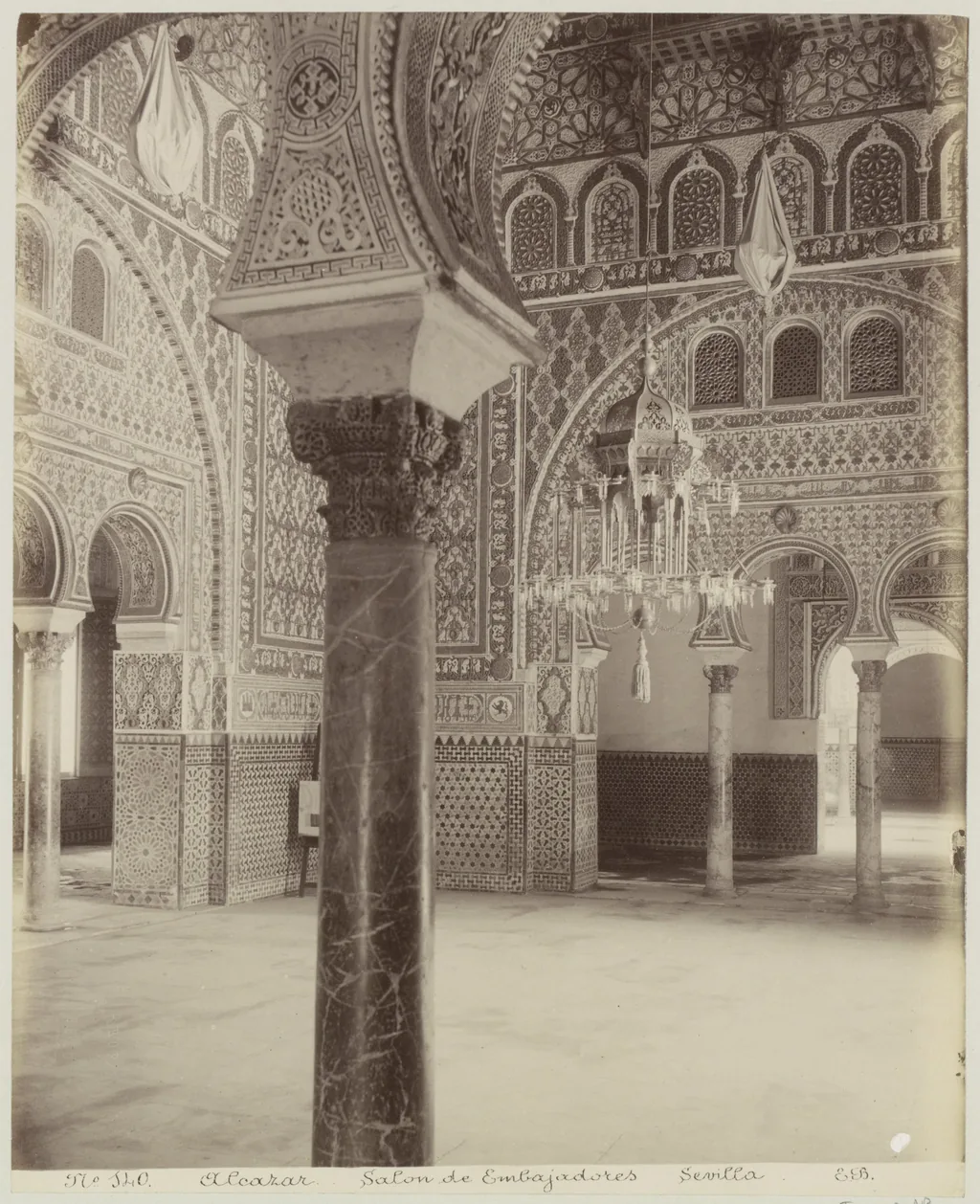
On 11 March 1526, Charles V married Isabella of Portugal in the Alcázar. The palace is marking the anniversary through 2026 with a congress, themed visits and theatrical night visits on the wedding; see night visits and the Hall of the Ambassadors, where the celebration was held.
Why a Christian king built an "Islamic" palace
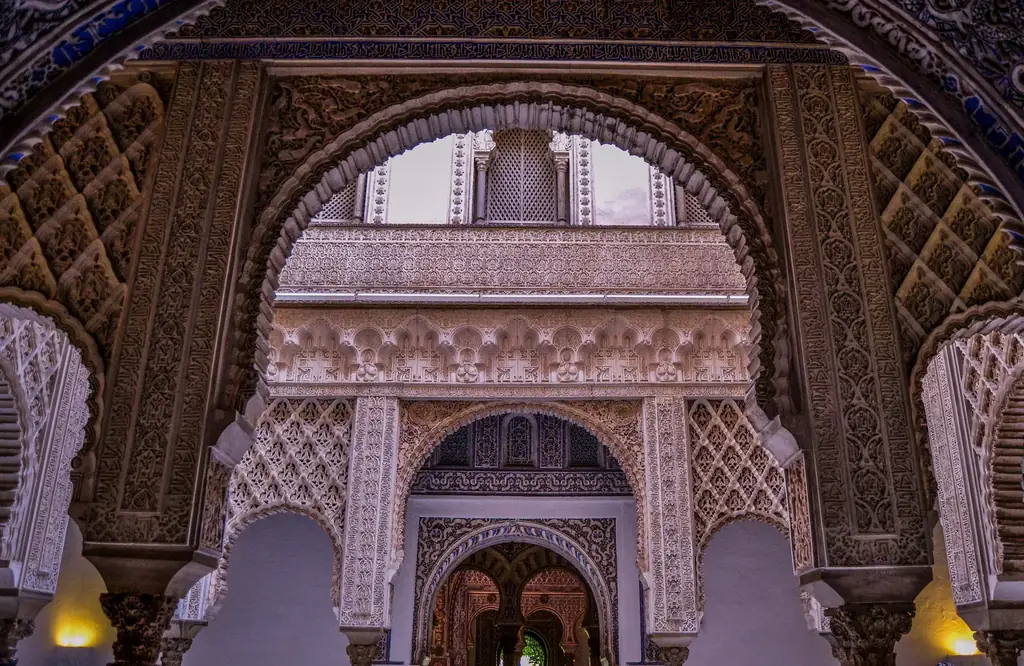
Mudéjar is the name for Islamic-style art made in Christian Spain. For Pedro I, the refined architecture of al-Andalus was simply the most prestigious style available: carved plaster, tiled walls, wooden ceilings and courtyards with water. The inscriptions in his palace mix Arabic praise with Castilian titles, one of the clearest signs of how the two cultures met here.
Who built which part
The Alcázar is not one building with one history, and the quickest way to read it is by builder:
Who
When
What is theirs
The Umayyads
913
The first government house, and the line of the oldest walls
The Abbadids
11th century
Al-Mubarak, the palace under the Patio de la Montería
The Almohads
from 1169
The Patio del Yeso, the Patio del Crucero garden, stretches of wall
Alfonso X
from 1258
The Gothic Palace and the vaults under the Patio del Crucero
Alfonso XI
after 1340
The Hall of Justice
Pedro I
1364–1366
The Mudéjar palace: Patio de las Doncellas, Hall of the Ambassadors
Charles V
1540–1572
The Renaissance gallery above the Patio de las Doncellas
Philip III
17th century
The gardens as they look now, and the Galería del Grutesco
The upper floor, the Upper Royal Quarters, is still used by the Spanish royal family when they stay in Seville, which makes the Alcázar a working royal palace as well as a monument.
See the history with a guide
The palace is easier to read with someone pointing out who built which room and why. The guided tour with priority access (from €56.00, free cancellation) covers the main palaces.
Photographs from Wikimedia Commons, each under its own open licence, credited beneath it.
Photo: Emilio Beauchy (Rijksmuseum), CC0Photographed more than a century ago and recognisable today, which is the point of a conservation regime this strict.
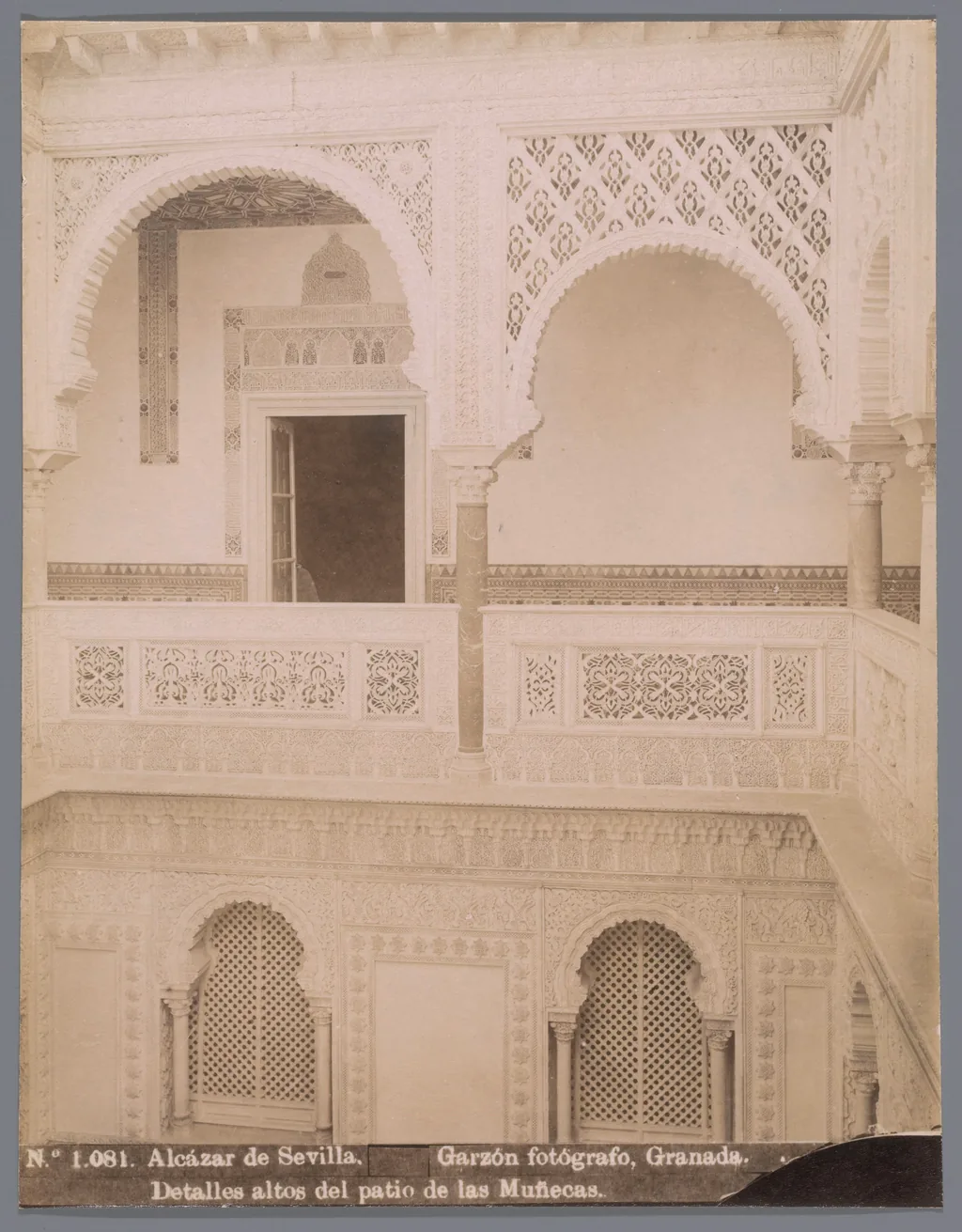
Photo: Rafael Garzón (Rijksmuseum), CC0The small courtyard was the private, family side of the palace, as against the ceremonial Doncellas.
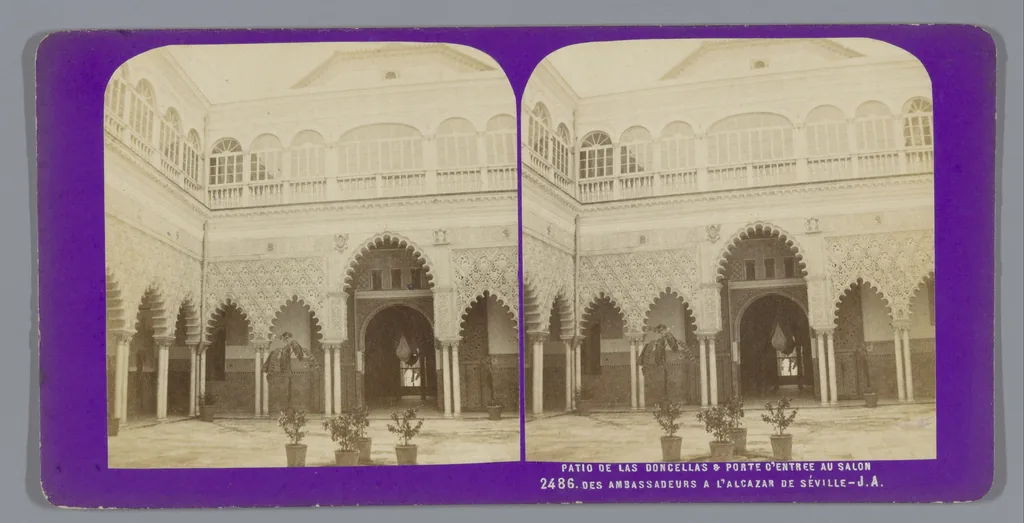
Photo: Jean Andrieu (Rijksmuseum), CC0Stereo cards were the tourist souvenir of their day: two near-identical views that looked solid through a viewer.
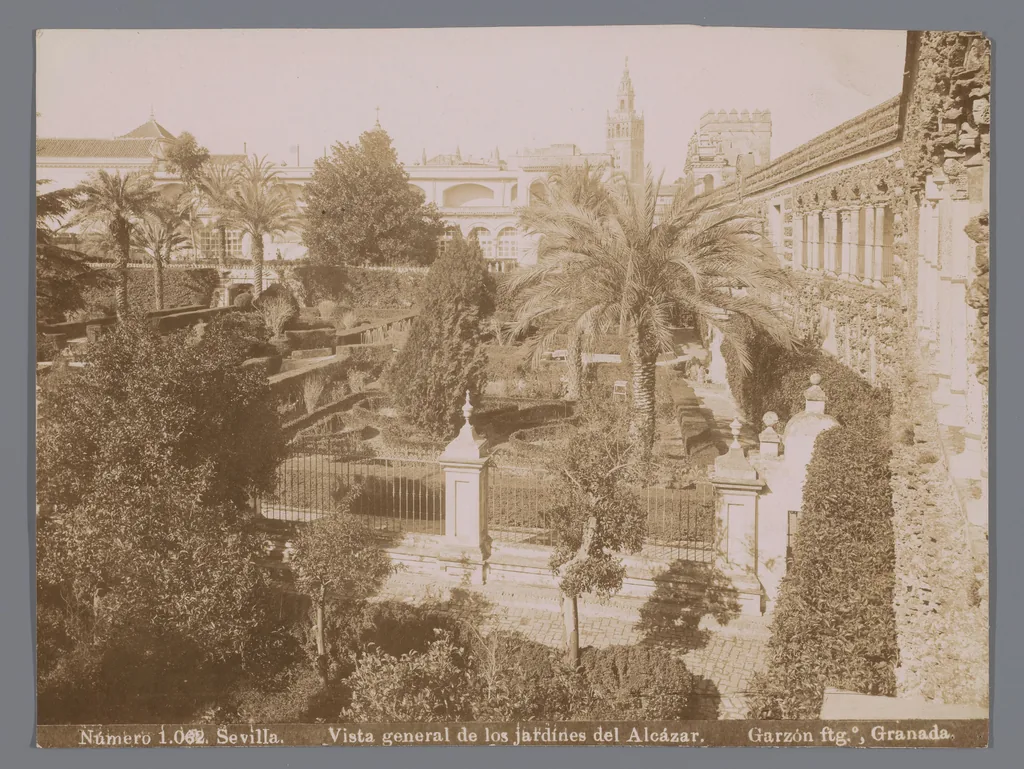
Photo: Rafael Garzón (Rijksmuseum), CC0The gardens have been replanted many times. The walls and the water are the parts that stayed put.
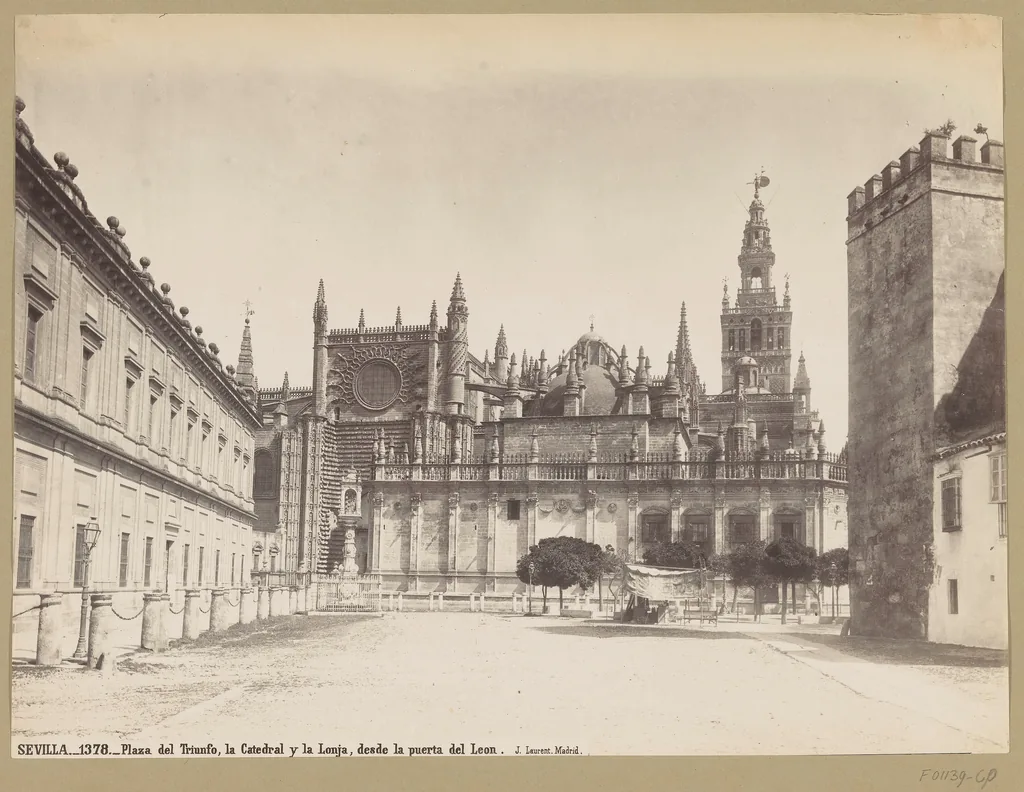
Photo: J. Laurent (Rijksmuseum), CC0This is the square you cross between the Cathedral and the Lion Gate, and it has barely changed shape.
Prices and currency can differ between the two offers — check both before booking.
Prices, ratings and review counts from Viator, checked on September 30, 2026. They can change at any time.
GetYourGuide prices, ratings and review counts checked on October 7, 2026. They can change at any time.
Prices per adult, ratings and conditions come from Viator and GetYourGuide; each platform's own page shows today's price. Affiliate links: if you book through one, the site may earn a commission from that platform, at no extra cost to you.