The Real Alcázar was photographed almost as soon as photography could travel. The six prints on this page were made between about 1857 and 1920, and they are held by the Rijksmuseum in Amsterdam, which has released them into the public domain.
They are worth a look before you visit for one reason: the palace in them is the palace you are about to walk through. Not similar. The same.
Who took them
The men who made these prints were not tourists with cameras. They ran photographic businesses, and Spain's monuments were their stock.
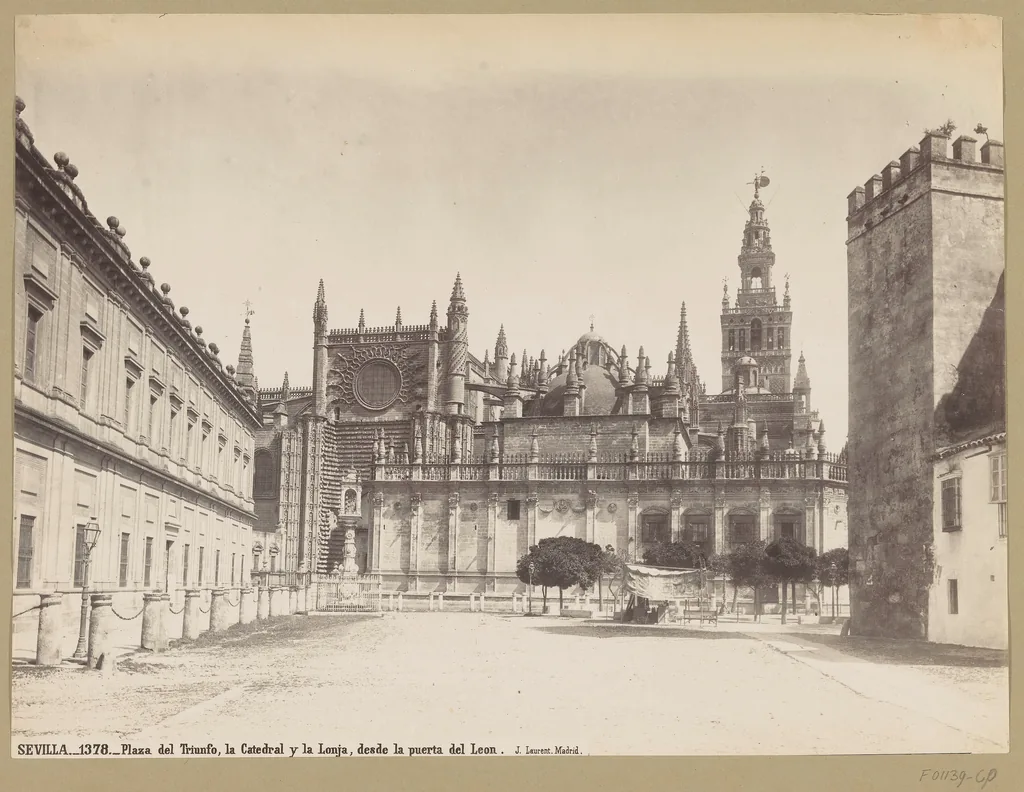
J. Laurent worked through Spain systematically, building a catalogue of its buildings for sale.
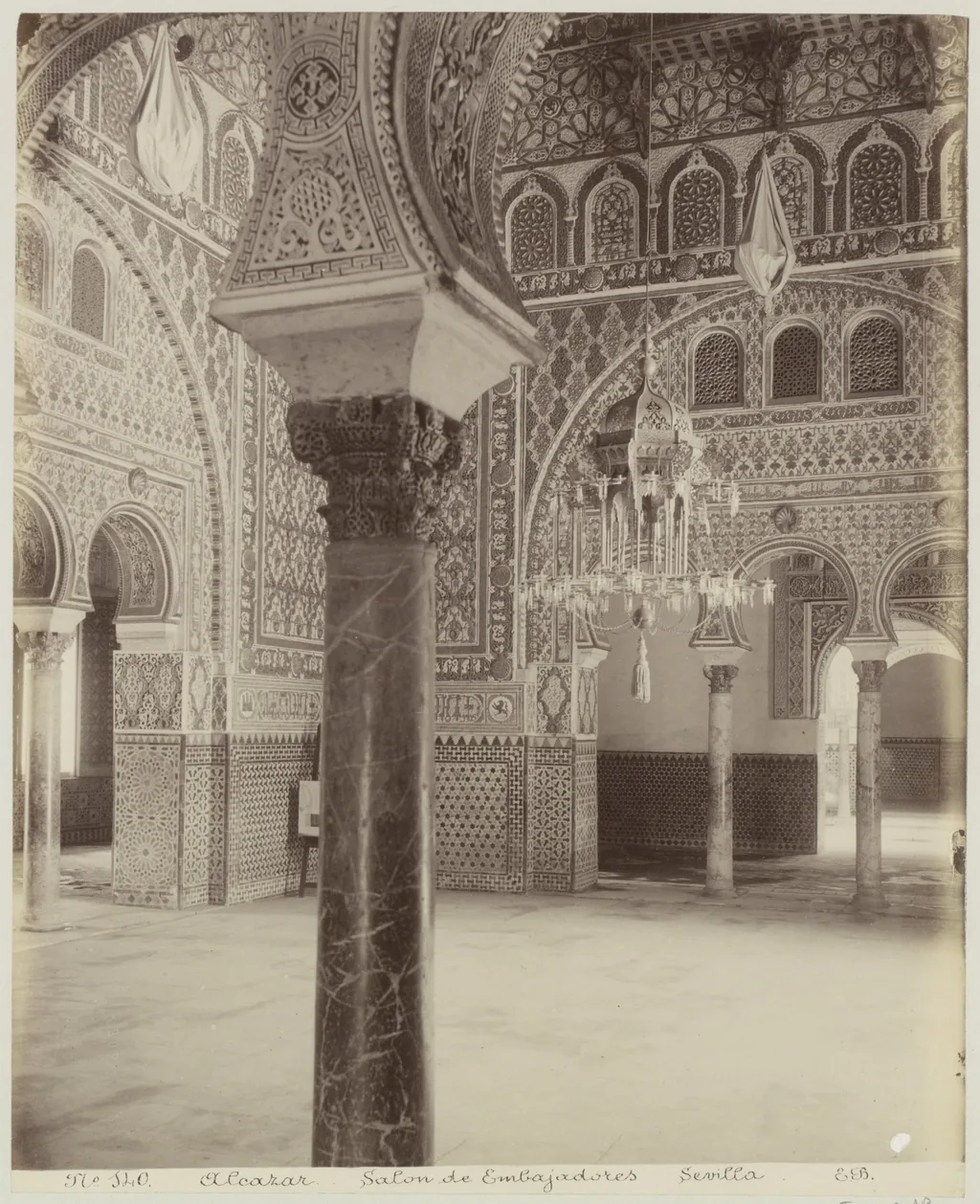
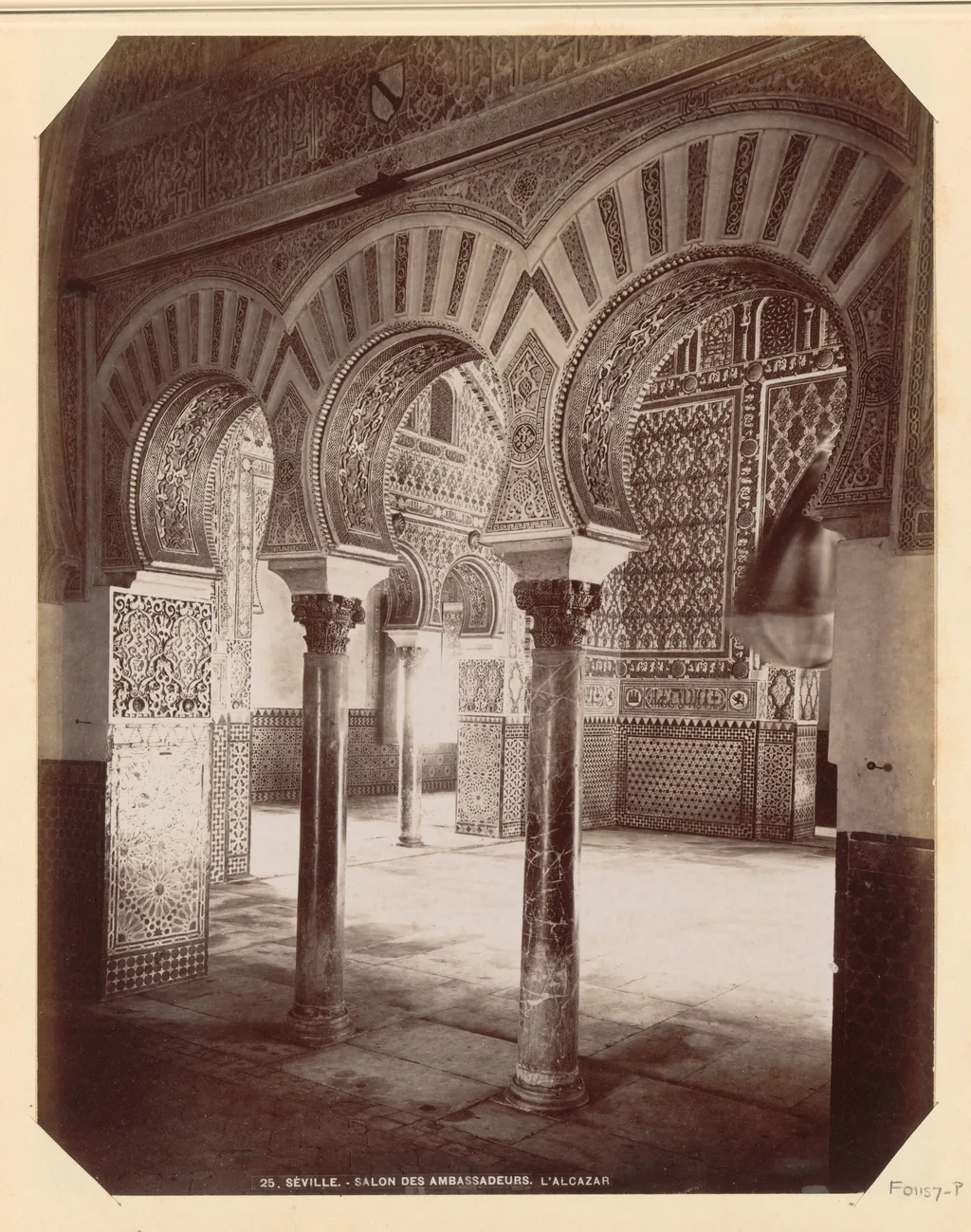
Emilio Beauchy worked in Seville itself; his view of the Hall of Ambassadors comes from a travel album of Spain and Morocco.
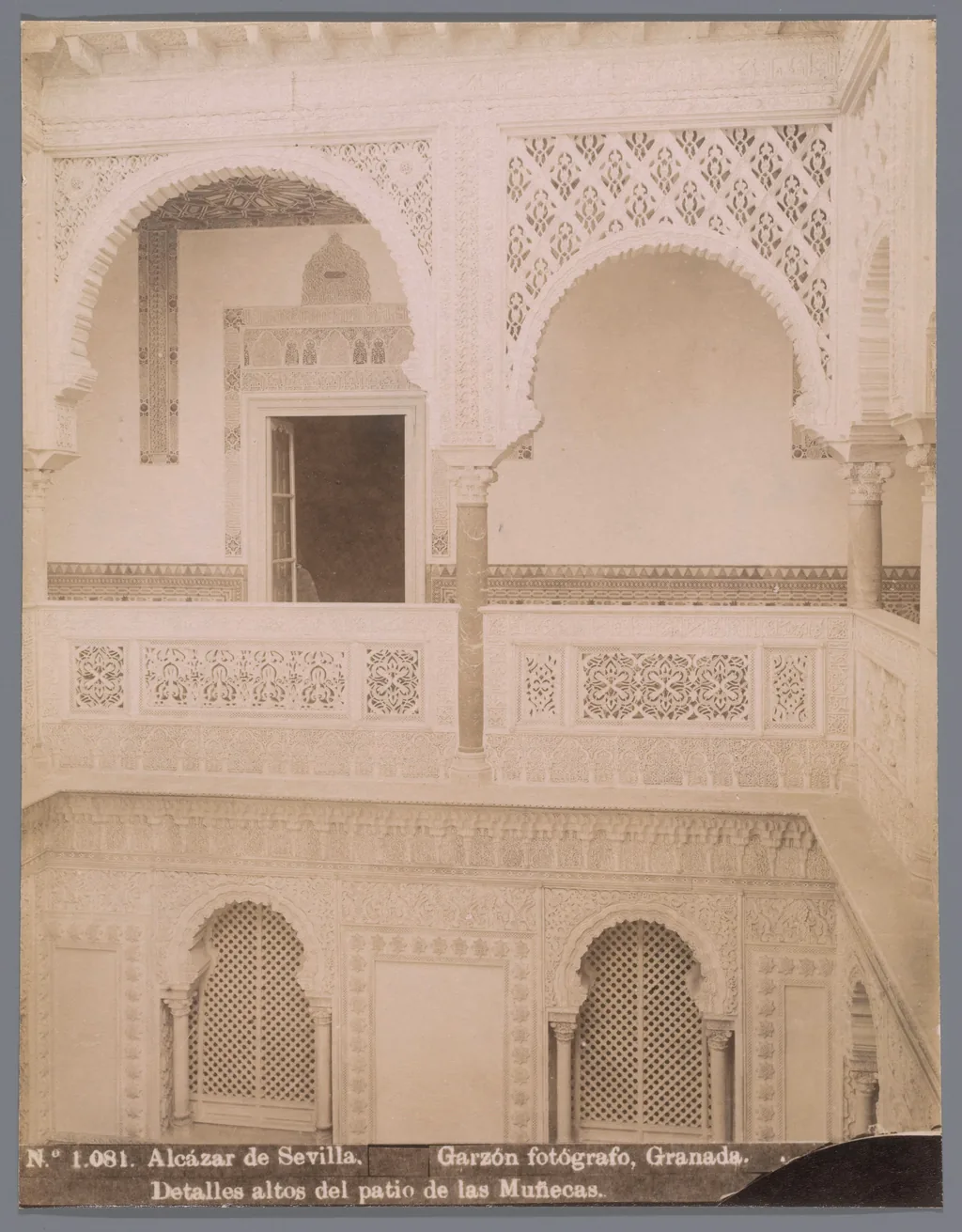
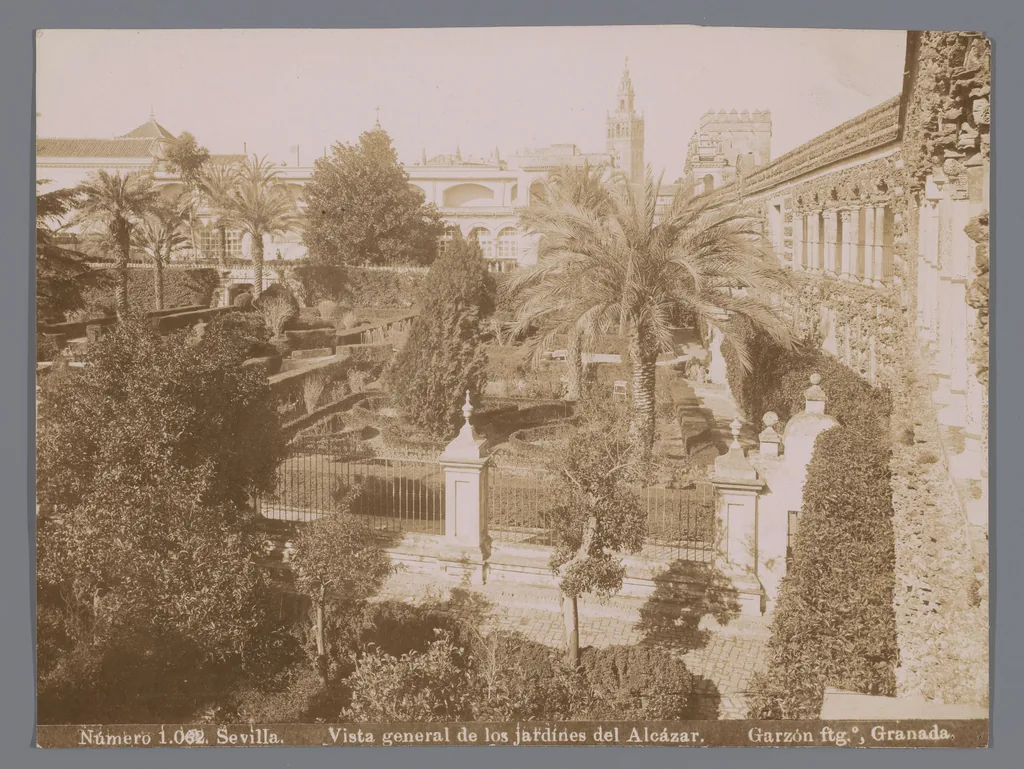
Rafael Garzón photographed from Granada and printed his titles onto the pictures, numbered like a catalogue, because that is what they were.
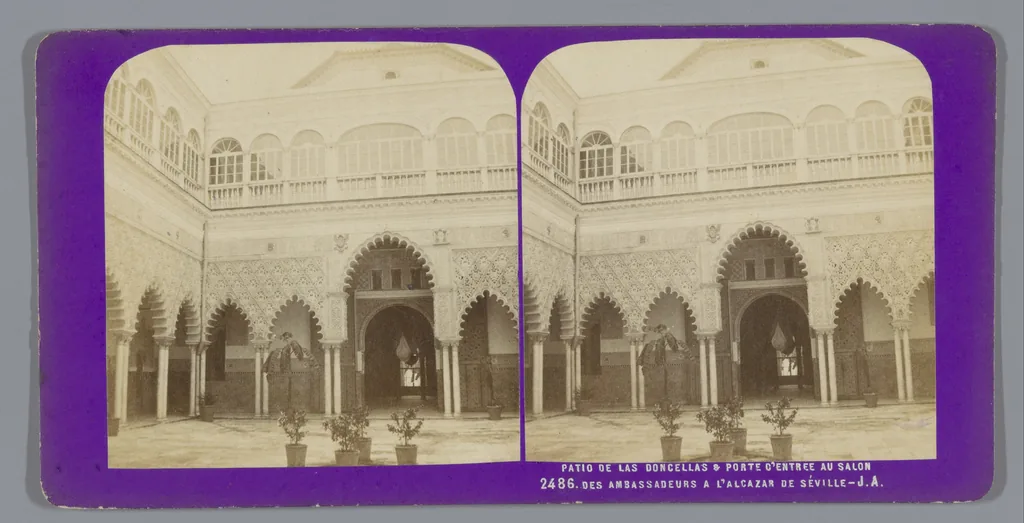
Jean Andrieu made stereoscopic cards: two nearly identical views that stood up in relief when held to a viewer. The souvenir trade of its day.
Léon & Lévy of Paris, to whom one of these is attributed, sold views of Europe by the thousand.
What to look for
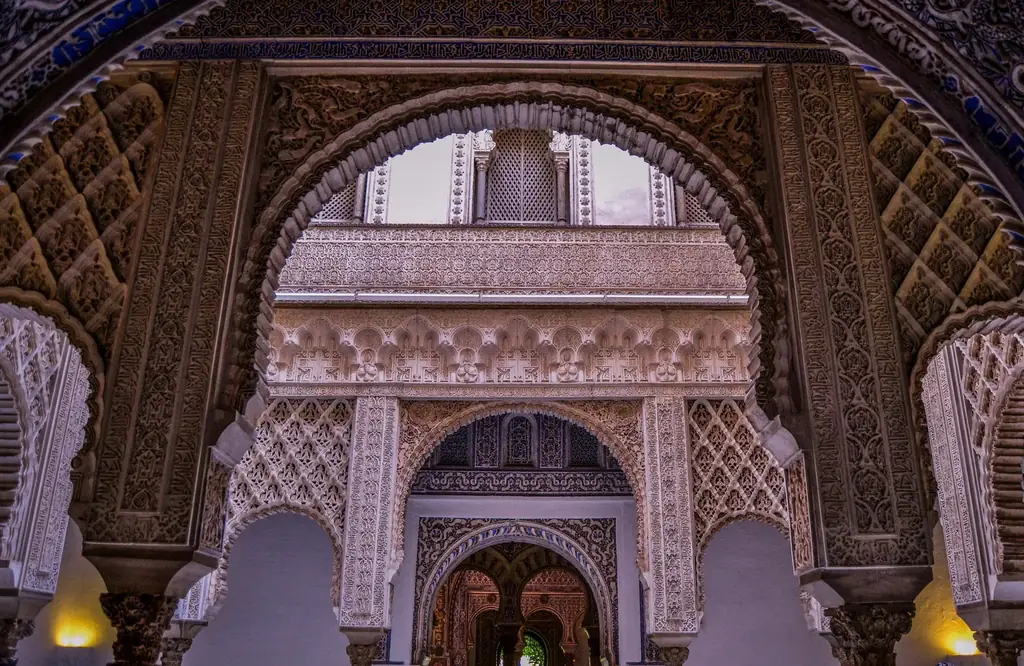
The carved plaster, the tilework and the arches are the easy part; they match. Three things do not, and they are more interesting:
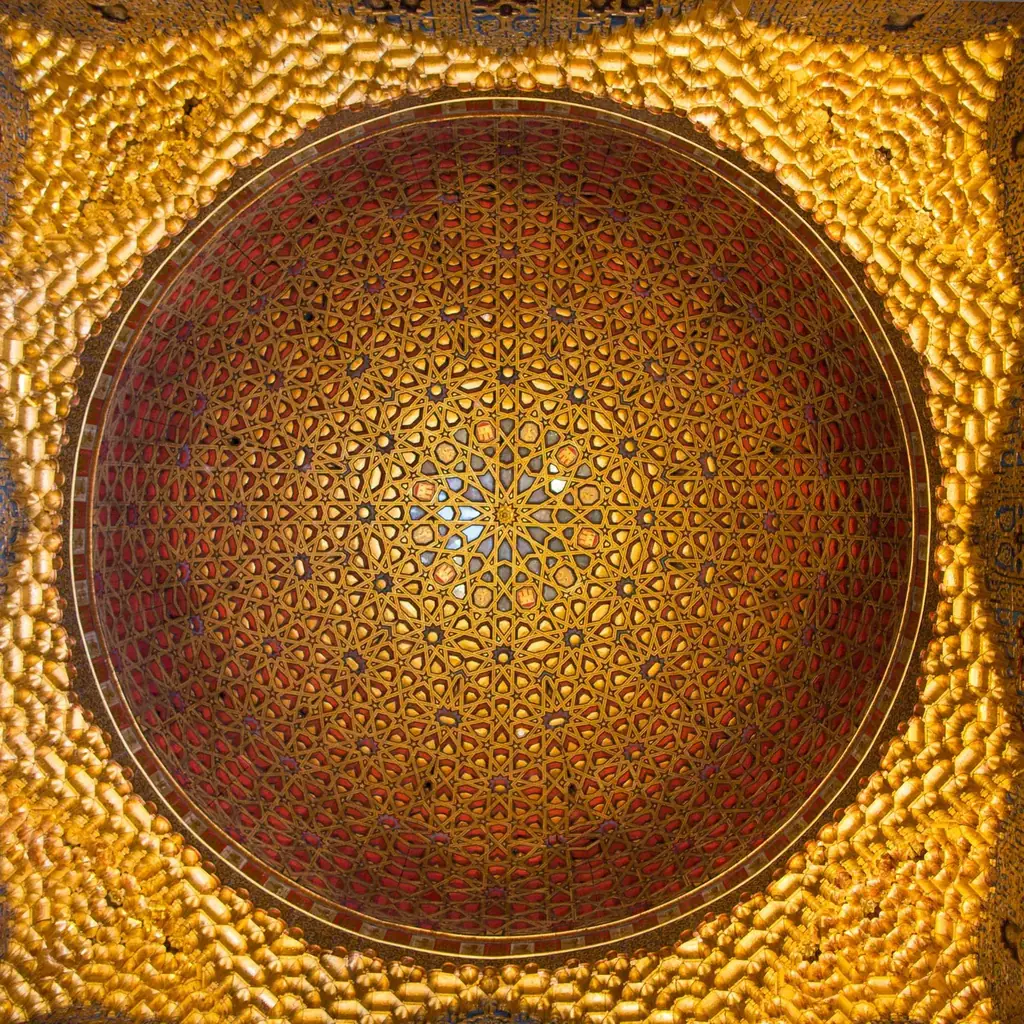
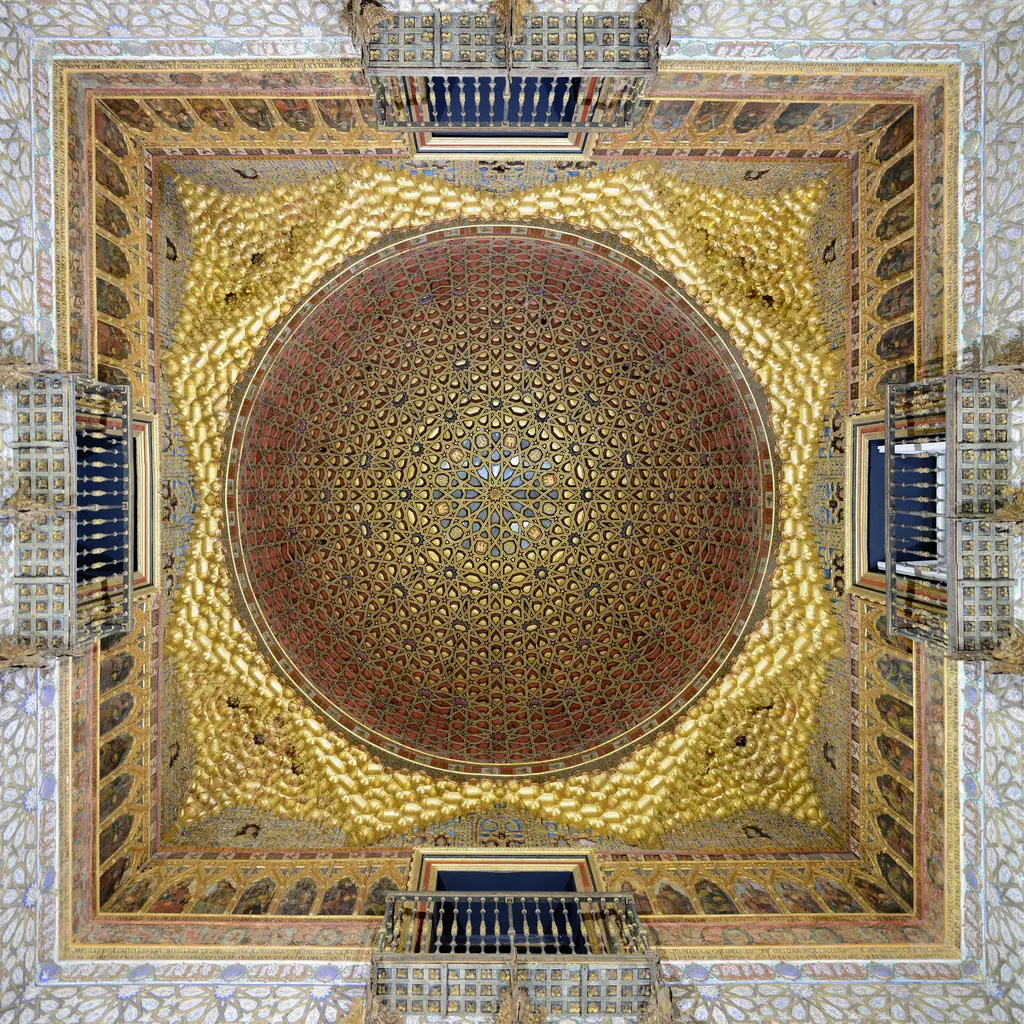
The gold does not read. Exposures that long turn a gilded dome into flat grey. The Hall of Ambassadors looks dimmer in 1860 than it does in life.
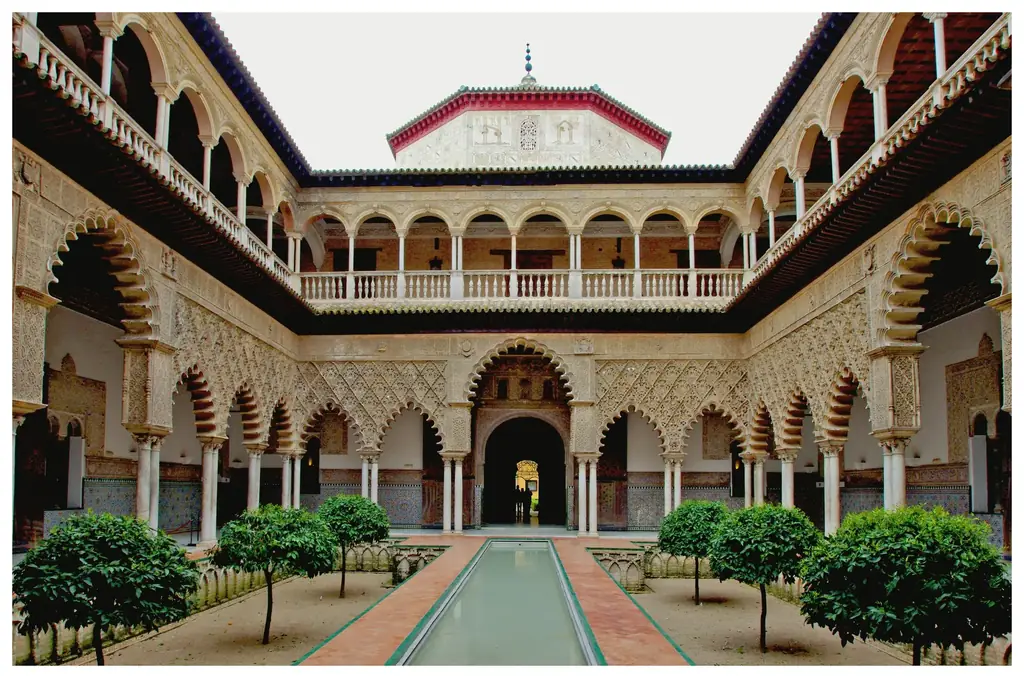
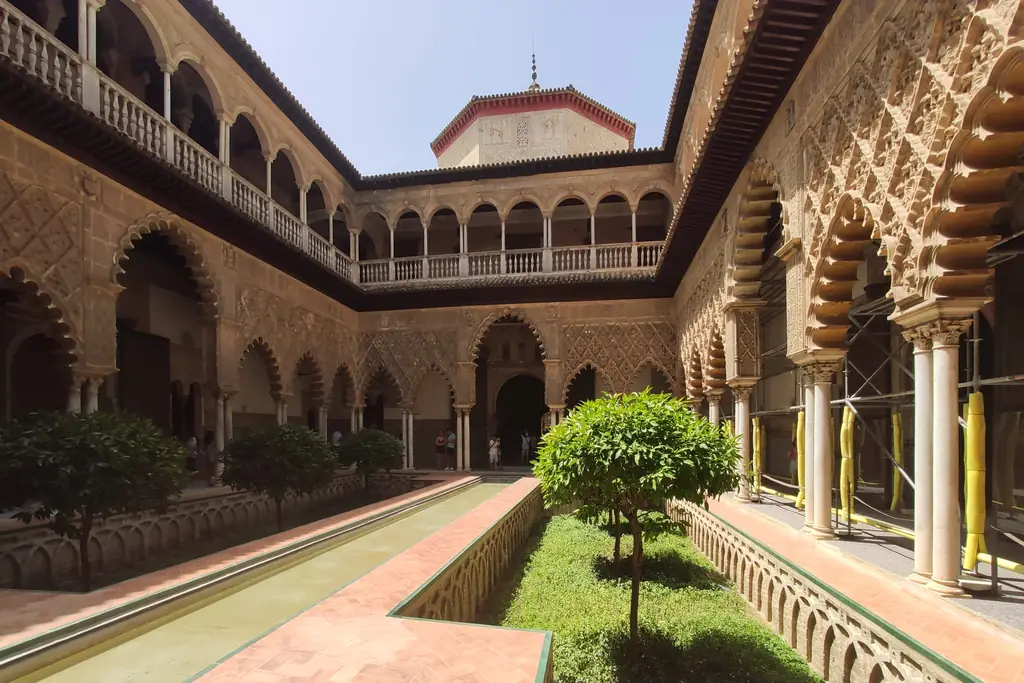
The floor of the Patio de las Doncellas is wrong. The sunken garden and its long pool were under a flat surface when the stereo card was made.
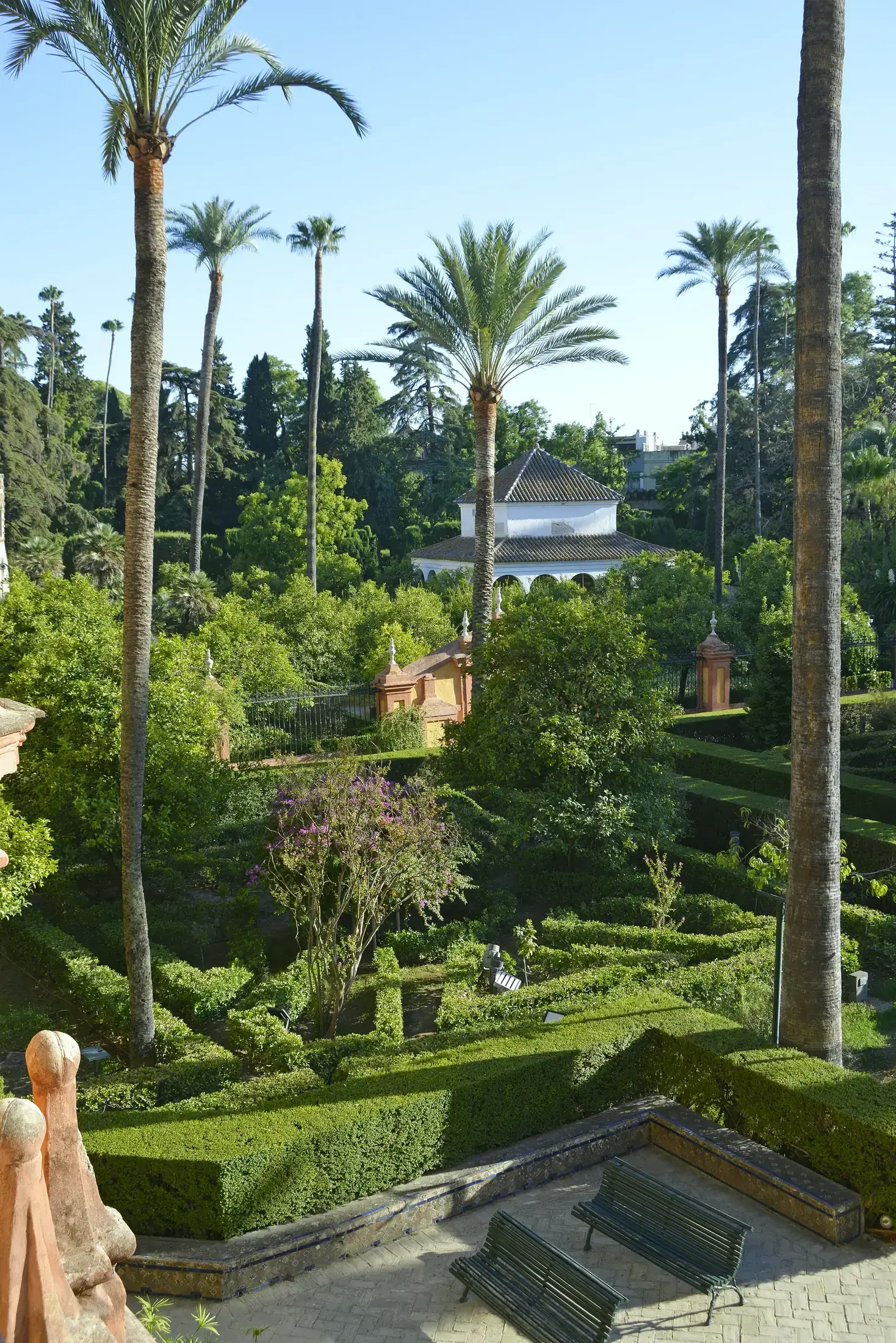
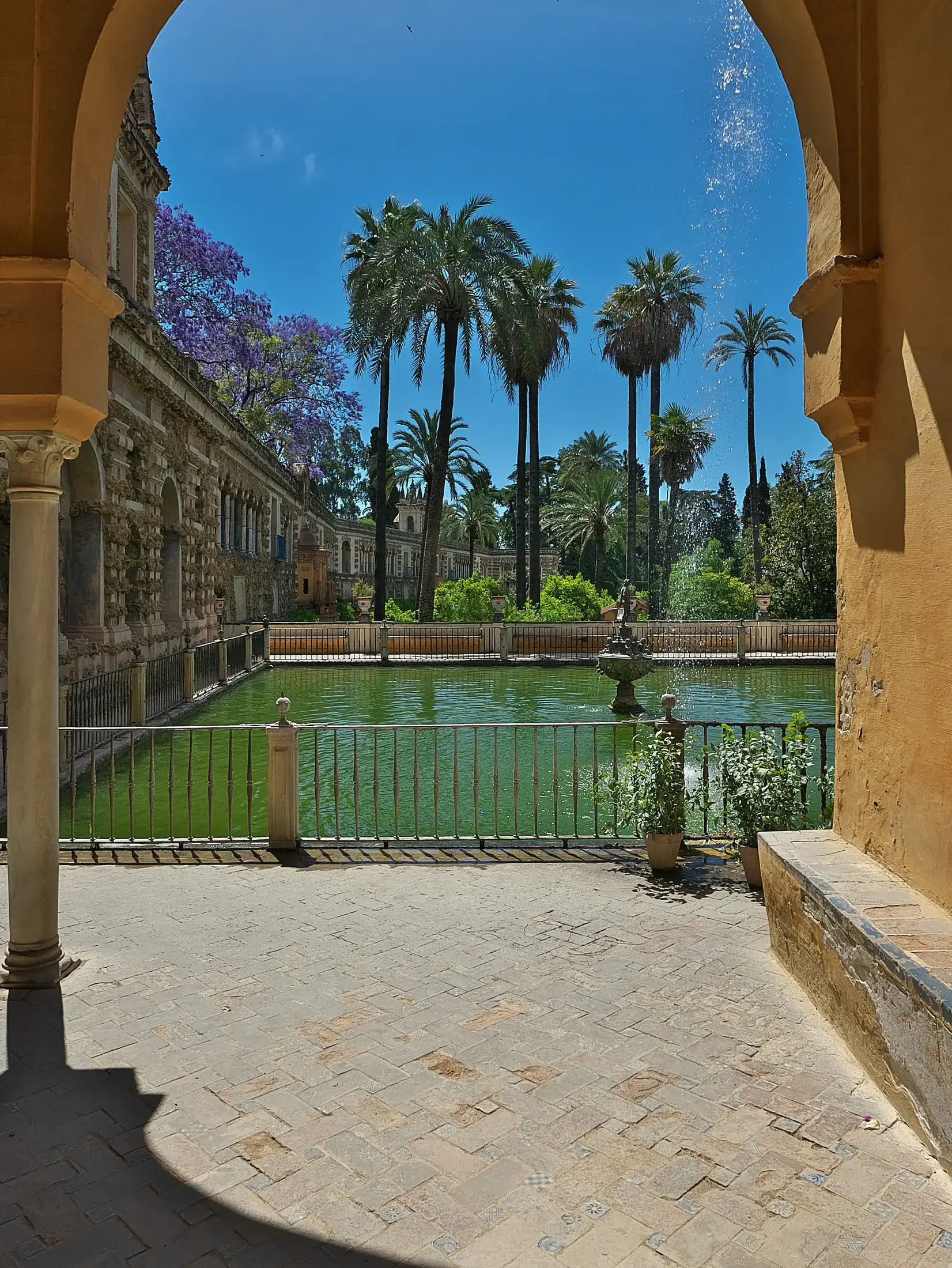
The planting has changed completely. Walls and water stay; a garden does not keep the same plants for a century.
Why they are here
You can use these photographs yourself. The Rijksmuseum has put them in the public domain, and every one on this page carries its photographer, its date and its museum object number so that you can find the original.
Our photo gallery has them alongside ninety more pictures of the palace, all openly licensed and credited. For what happened between these prints and now, see the history of the Alcázar.
Then and now, six times
On the left, the print as the Rijksmuseum holds it, with its photographer, its date and its object number. On the right, the same place photographed in our own time. Judge the resemblance yourself.
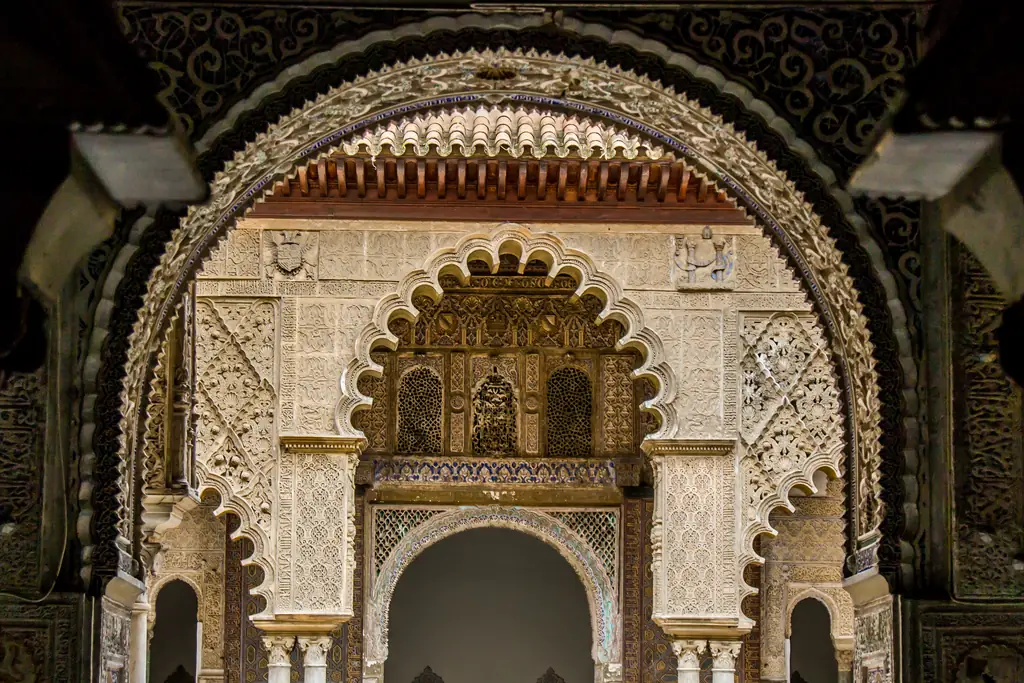
Emilio Beauchy photographed this room for a travel album of Spain and Morocco. The horseshoe arches, the columns between them and the carved band above have not moved. What the camera could not hold is the gold: a long exposure flattens the dome into grey, and that is the one thing a modern photograph gets and this one cannot.
A stereoscopic card, sold as a souvenir to be looked at through a viewer, which is why the image is doubled. The arcade is the same. The floor is not: the sunken garden and its pool lay under a flat surface when this was taken, and what you walk around today was recovered later.
Attributed to the Paris firm Leon & Levy and dated to within a few years. Visitors still stop at this exact spot and still frame the shot the same way, because the room gives you very little choice about where to stand.
Rafael Garzon worked out of Granada and printed his title straight onto the photograph: "Alcazar de Sevilla. Detalles altos del patio de las Munecas". He was selling the upper gallery as a detail worth buying, which is roughly what a visitor photographs there now.
Another Garzon print, captioned "Vista general de los jardines del Alcazar". The walls, the terraces and the water are where they are today. The planting is not, and no garden this old has the same plants twice in a century.
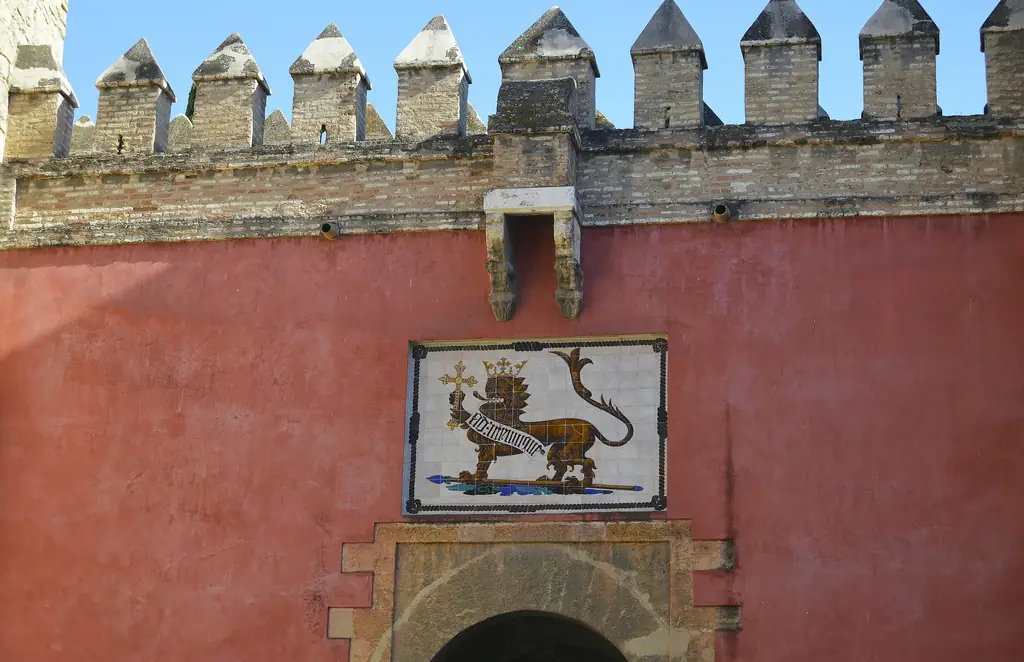
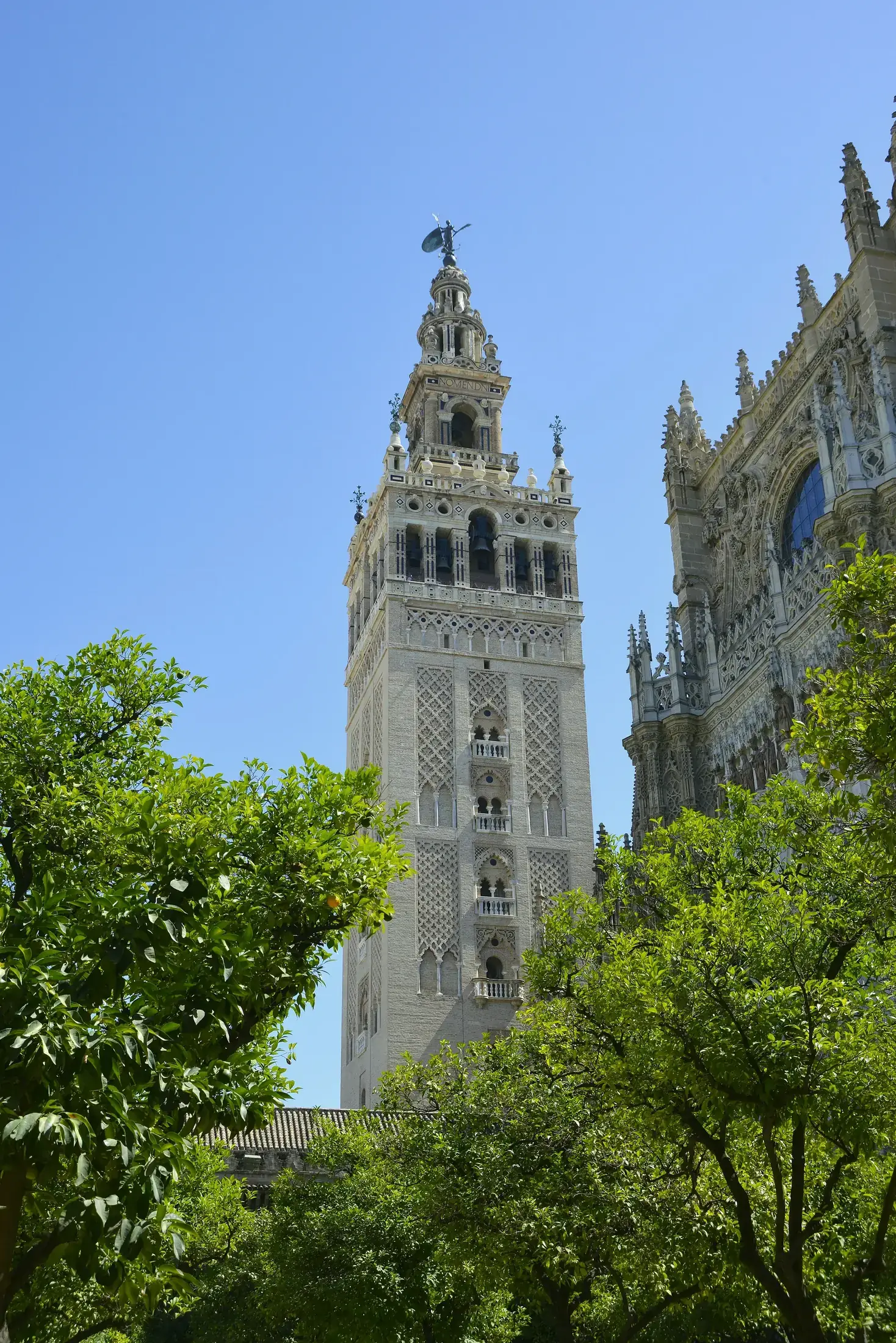
J. Laurent, one of the first photographers to work through Spain systematically, stood inside the gate you queue at and looked out. The Cathedral, the Archivo de Indias and the shape of the square are unchanged. Everything crossing it is different.
Prices per adult, ratings and conditions come from Viator and are refreshed when the site is updated; Viator's page shows today's price. Affiliate links.