Triana is the far bank: the neighbourhood on the west side of the Guadalquivir, joined to the centre by the Puente de Isabel II, built between 1845 and 1852 and known to everyone as the Triana bridge. It is where the city's potters, sailors and flamenco families lived, and it is the best evening walk in Seville, half an hour from the Alcázar on foot.
History and places from Wikipedia's article on Triana; walking times are our own.
Why it is worth crossing
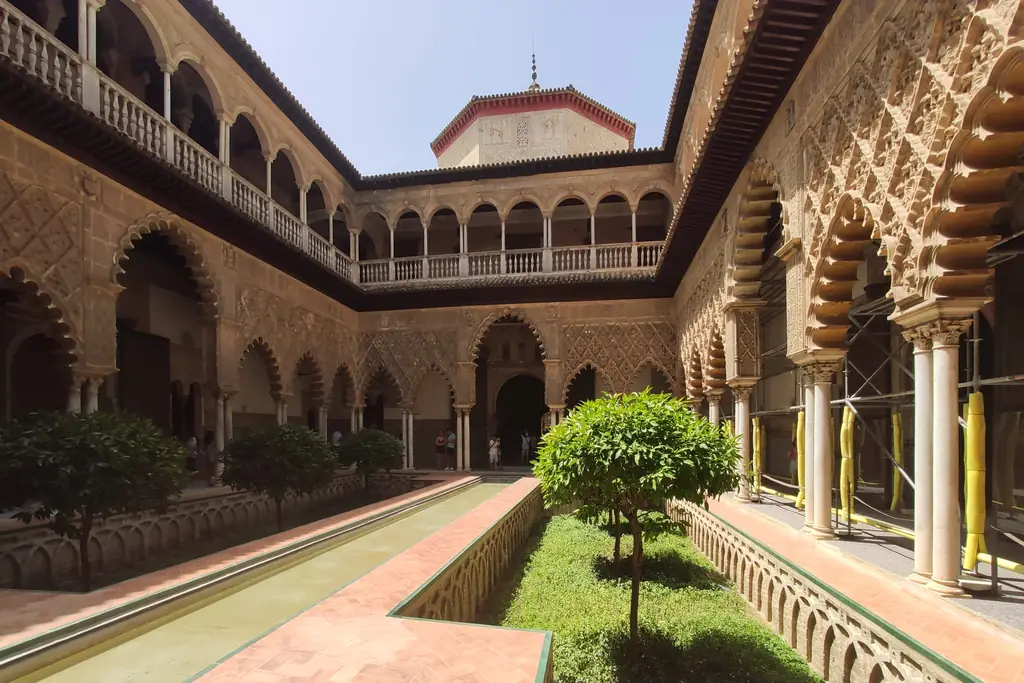
The tiles. Triana has a long pottery and tile tradition, and the Centro Cerámica Santa Ana tells that story in a museum among the old workshops. The tiles you admire in the Alcázar belong to the same craft, carried across the river and down the centuries.
The market, and what is under it. The Mercado de Triana stands on the remains of the Castillo de San Jorge, the castle that was the seat of the Spanish Inquisition until 1785. Downstairs, a museum tells that history; upstairs, people are buying fish. Few places in Spain compress so much into one building.
The river front.Calle Betis, along the water, gives the classic view back to the centre, and holds many of the city's best-known bars.
The Capilla de los Marineros, the Sailors' Chapel, home of the brotherhood La Esperanza de Triana, one of the most followed in the city. In Holy Week this street is the centre of the world; see Semana Santa and the Feria.
A two-hour walk
Cross the Triana bridge at the end of the afternoon.
Mercado de Triana and the castle museum underneath.
Calle Alfarería and the ceramics workshops, a couple of streets inland.
Centro Cerámica Santa Ana, if it is open.
Capilla de los Marineros.
Calle Betis at sunset, with the centre lit across the water.
When to go
Late afternoon into the evening. The light on the river and the bars opening.
July, if you want the neighbourhood at full volume: the Velá de Santa Ana runs between 21 and 26 July, with sherry and sevillanas by the river.
Any evening after the Alcázar. The palace clears at 19:45 in summer, which leaves the whole evening free.
Prices per adult, ratings and conditions come from Viator and are refreshed when the site is updated; Viator's page shows today's price. Affiliate links.